
RAYPCB · ENGINEERING & PROCUREMENT
Custom Electronics Manufacturing Requirements: Define a Buildable Scope
Custom electronics manufacturing requirements translate a product idea or existing design into a scope that a supplier can review and quote. Custom may mean a special PCB construction, a unique assembly, firmware configuration, mechanical integration or a combination. This page helps you separate those tasks, identify missing inputs and request an appropriate next step without assuming that every supplier provides every development or product-approval service.
Your task: Name the required deliverable. Use the custom manufacturing scope builder to record the next decision.
Open custom manufacturing scope builder · Discuss the project
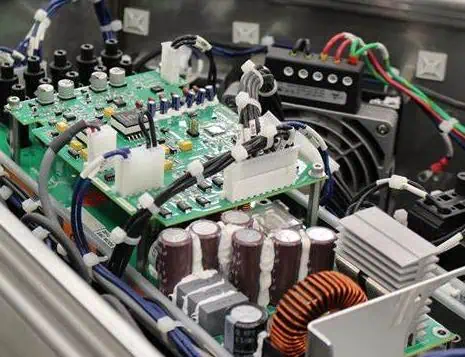
Describe the output, not only the application
Explain what you want delivered: a bare board, populated board, programmed module, integrated device or repeat supply program. State the intended use and environment because they influence requirements, but do not rely on an industry label to define all technical details.
Identify the current maturity of the design. A concept, reviewed schematic, completed layout and proven production package require different work. Tell the supplier which inputs exist and which must be developed.
This page focuses on scoping custom work. The wider ongoing service relationship belongs with electronic contract manufacturing, while the stage sequence is covered by electronic product manufacturing.
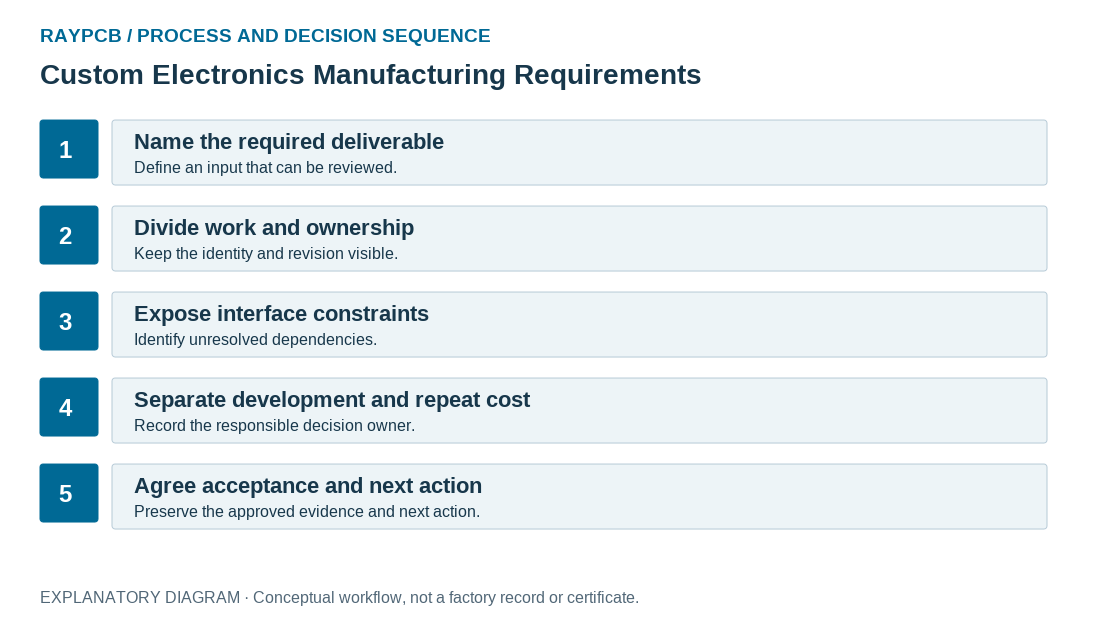
Break the request into work packages
Separate electronic design, PCB fabrication, component sourcing, assembly, programming, test development, enclosure integration and packaging. Assign each to the customer, supplier or another partner. Mark undecided ownership openly.
A supplier can then confirm the work it can support and identify dependencies. A broad one-stop request without those boundaries can lead to different assumptions across quotations.
For a hypothetical monitoring device, the customer may own firmware and calibration while requesting PCB fabrication, component sourcing and assembly. The quote should identify the tests performed before delivery and the calibration work retained by the customer.
Define interfaces that could invalidate the build
Supply board outline, mounting points, connector locations, power interfaces, mechanical limits and relevant environmental conditions. Where requirements are still uncertain, state the decision process and owner.
Identify special construction or assembly needs: flex regions, RF material, heavy copper, unusual components, coating or a particular test route may require targeted review. Do not combine them into a generic complexity score and assume that establishes feasibility.
The PCB manufacturing and PCB assembly pages provide the respective service paths. Exact capability for a custom combination needs project-specific confirmation.
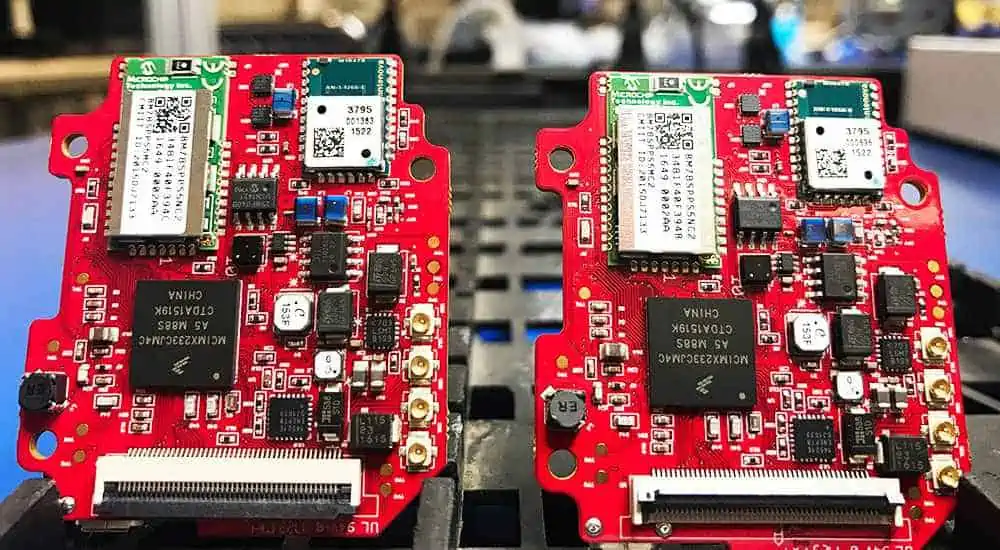
Use a scope brief before asking for a final price
The tool organizes required work, available evidence and unresolved responsibilities. It produces a text brief that can support the first conversation. It does not select a chip, generate a schematic or approve a manufacturing process.
Custom manufacturing scope builder
Custom manufacturing scope builder
How to use and interpret this worksheet
Choose a narrow review boundary before filling in the worksheet. Use one product revision, one proposed build or one supplier decision. If several configurations differ, keep separate records or explain precisely which evidence applies to each. A short reference is enough; the tool does not need drawings, customer names, confidential part lists or passwords.
For every item, distinguish confirmed evidence from an unresolved assumption. Confirmed means that the responsible person has reviewed the relevant information, not merely that a document exists somewhere. Open means the decision or evidence is still missing. Not applicable requires a rationale because it is an applicability decision, not a shortcut to completion.
Record a concrete next action with an owner and a target decision point. For example, replace ask engineering with obtain the approved revision from the design owner before material release. The useful output is an actionable handoff, not a readiness percentage. No weighted score is used, because the consequence of one mandatory gap may exceed that of several completed items.
Load example only to learn the controls. Example mode remains clearly labeled even if you edit its values. Clear the form before entering your own review. Changing an input invalidates the old result and disables its download until you generate a new record. Download the current text if it helps your discussion; it is not automatically added to an enquiry.
Keep supporting approvals and measured results in the controlled project system. This worksheet stores nothing between visits and does not verify files, supplier statements or legal applicability. A completed record can support a review meeting, but the authorized team remains responsible for the release decision.
A missing input is useful information. For example, no test procedure may mean test development must be quoted rather than that testing is unnecessary. No final enclosure drawing may mean mechanical integration is still a development task.
Use the resulting questions to choose the next bounded activity: feasibility review, prototype build, file completion or firm quotation. Do not force an incomplete concept into a production-ready checklist.
Keep a decision record with the review
Use this record to connect the discussion to supporting information. Record the source, revision and reviewer for each item. Confirmed means the responsible person has reviewed the evidence; it does not mean this website has verified it. Keep confidential documents in your approved project system.
| Review topic | Record to retain | When it remains open |
|---|---|---|
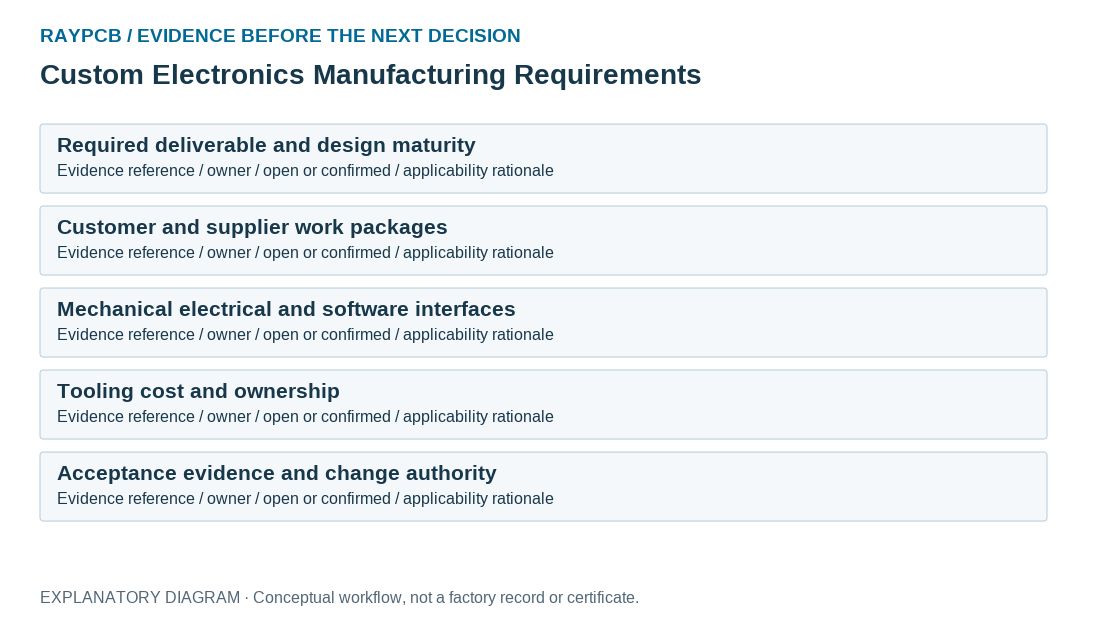
| Required deliverable and design maturity | Identify the controlled scope and the person authorized to approve it. Keep the current reference together with the intended decision. | Clarify the boundary before treating the review as a release instruction. |
| Customer and supplier work packages | Reference the actual file, data source or agreed requirement, including its revision or date and the person who reviewed it. | Request the missing evidence and identify which downstream decision depends on it. |
| Mechanical electrical and software interfaces | Record the conditions and assumptions that make the evidence applicable. Separate a proposed value from an approved requirement. | Keep the assumption visible and define whether the next activity may proceed under a bounded exception. |
| Tooling cost and ownership | Identify responsibility for the next operation and the evidence expected afterward. Distinguish preparation from a completed result. | Assign a named role and an agreed decision point; do not turn an unanswered question into an approval. |
| Acceptance evidence and change authority | Record the final disposition, affected quantity or revision and the authority accepting it. Preserve the reason for any exception. | Retain the item in the action list and review its consequence before committing work or materials. |
Review the record again when the product, supplier proposal or supporting data changes. A result from an earlier revision is historical evidence, not automatic approval for the current one. If an item is not applicable, retain the reason and the person who made that decision.
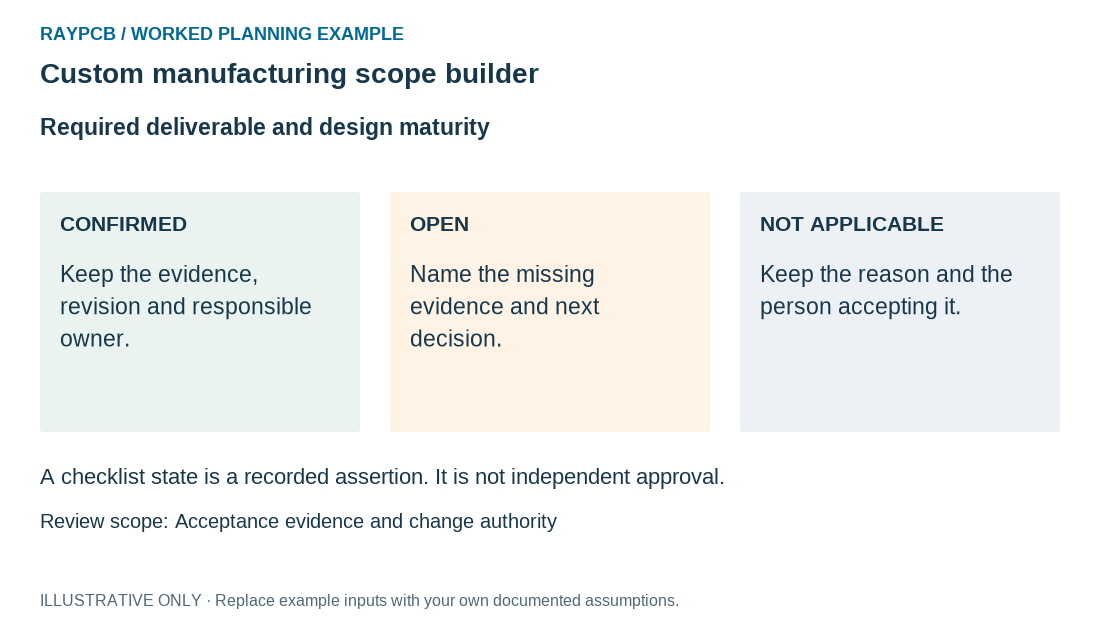
Separate custom tooling and development from repeat cost
Identify fixtures, stencils, programs, special tooling, design effort and qualification activities that may be nonrecurring. Then identify recurring materials, build operations, tests and packaging. Confirm which items are reusable after a revision.
Custom work can create commitments before units are built. Agree ownership, access and disposition of tooling and excess material. Do not assume a forecast authorizes every purchase.
For unfinished bare-board construction use preliminary PCB pricing. For engineering services use the PCB design RFQ guide. These are different estimates and should remain separate in the budget.
Agree what evidence defines acceptance
Specify functional requirements and the evidence needed to accept the delivered scope. Workmanship, board electrical checks, firmware verification and system tests can all have different responsibilities.
If a standard is required, identify the applicable document, revision, class and scope. Product safety, market requirements and material declarations need their own applicability review. A custom design does not receive automatic approval from being manufactured.
The electronics manufacturing standards guide provides a document map. Consult the IPC standards framework for authoritative scope information without treating it as evidence that a specific supplier or product is certified.
Build a change process before customization expands
Custom projects often evolve as engineering learns more. Record each change, its reason, affected files and cost or schedule implications. Identify who can approve it. A prototype exception should not automatically become a production instruction.
Use review milestones to keep the design, purchasing and manufacturing definitions aligned. If a component change affects firmware or mechanics, include those owners before release.
Discuss confidentiality and data ownership before transferring restricted information. The PCB design confidentiality guide helps frame the questions, while the actual agreement defines obligations. This page makes no blanket promise about security controls or ownership terms.
Questions for a custom enquiry
Can I begin with an idea? Yes, explain the intended function and what has been developed. The next step may be scope or feasibility discussion rather than a final build price.
Can RAYPCB provide every operation listed here? The list defines possible work packages, not an unconditional capability claim. Confirm the requested combination and responsibilities directly.
What should I send first? Provide a concise product brief, available drawings, immediate quantity, future forecast and the work you want reviewed. If the design is already released, send the controlled manufacturing package. The tool is optional and does not transmit your project information.