
RAYPCB · Surface engineering
HASL vs Lead-Free HASL: Alloy, Heat, Cost & Selection
The main difference between traditional HASL and lead-free HASL is the solder alloy, followed by the qualified thermal and assembly conditions. Both use hot-air levelling, and both need pad-geometry review. Compare named processes rather than assuming “lead-free” means flat, universally compatible or fully product-compliant.
Send preliminary files or an existing fabrication note. Identify the finish decision you need help resolving.
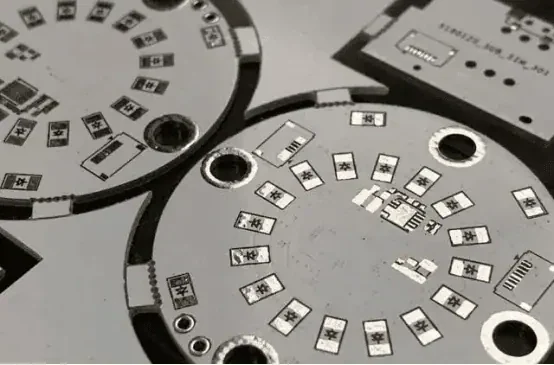
A clear starting point for the finish decision
| Specification item | How to use it |
|---|---|
| Finish system | HASL |
| Standards map | J-STD-006 alloy; IPC-6012 board acceptance; J-STD-003 solderability |
| Thickness planning | Geometry-dependent solder coverage; specify alloy, functional coverage and pad-height limits. |
| Main cost drivers | Often economical for compatible designs; flatness and thermal exposure can change total assembly cost. |
| Acceptance basis | Ordered revision, drawing, measurement, sampling and application-specific evidence. |
Thickness examples and selection guidance are not a complete IPC acceptance specification. State the contracted revision, measurement basis, sampling and application requirements on the order.
Shortlist by the interface your product needs
Choose the primary interface and the constraints that matter. The selector explains candidates and open questions; it does not rank finishes by a fabricated quality score. You can open the relevant finish page or go directly to an enquiry.
RAYPCB ENGINEERING
Surface FinishPCB Surface Finish Selector
Loading PCB Surface Finish Selector…
Define the two options before comparing them
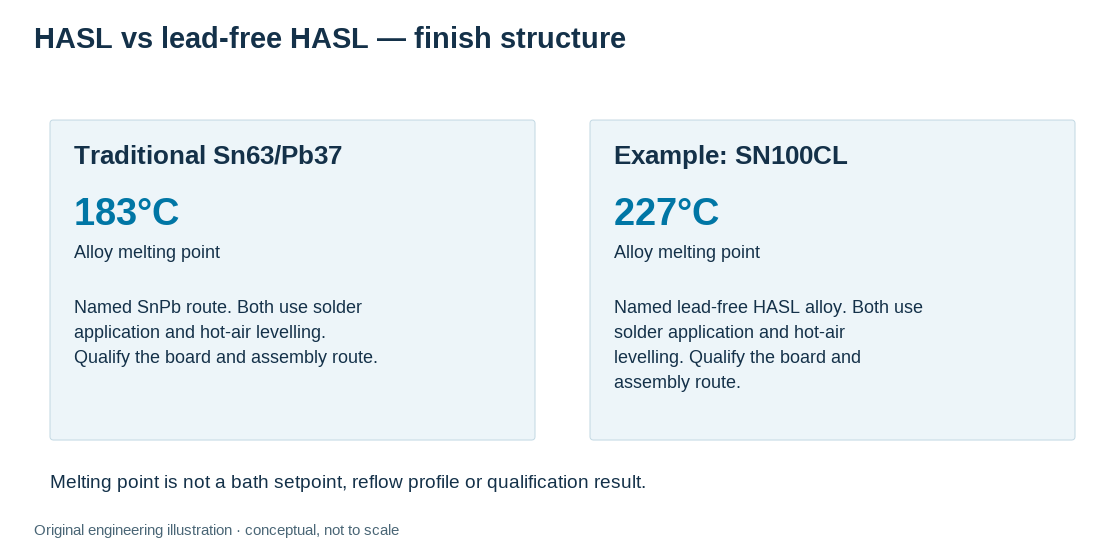
In a purchasing conversation, HASL is sometimes shorthand for a tin-lead finish, even though the process name itself does not specify the alloy. Write SnPb HASL for the lead-containing route and lead-free HASL with the approved alloy designation for the alternative. This removes an ambiguity that can otherwise survive from the quotation into the fabrication note.
Traditional eutectic Sn63/Pb37 solder melts at about 183°C. Lead-free solder families include different compositions with different melting behaviour and process requirements. A relevant example is SN100CL, listed by its manufacturer for hot air solder levelling with a melting point of 227°C. These are alloy melting values; neither is a complete bath recipe or an assembly reflow profile.
Do not use an arbitrary tin-bismuth, pure-tin or high-copper alloy as the generic definition of lead-free HASL. The actual finishing line must use a qualified chemistry and process. The comparison should identify what the supplier will deliver, not combine properties from several unrelated solder products. For the bare-board process itself, use the HASL PCB manufacturing guide.
Pad-height comparison workbench
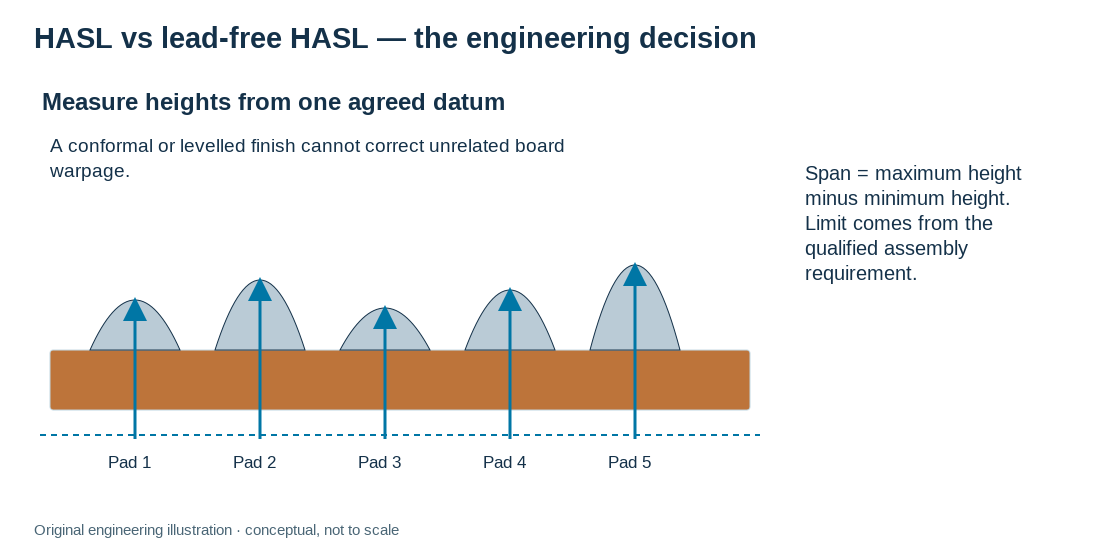
Use heights measured from one agreed datum. Span = highest reading − lowest reading. Enter a limit established for your assembly, or leave it blank for a descriptive result. The tool cannot prescribe a package-specific limit.
RAYPCB ENGINEERING
Surface FinishSurface Finish Engineering Workbench
Loading Surface Finish Engineering Workbench…
From surface preparation to a controlled release
Follow the sequence below. The optional step player is a conceptual explanation, not factory footage or a production recipe.
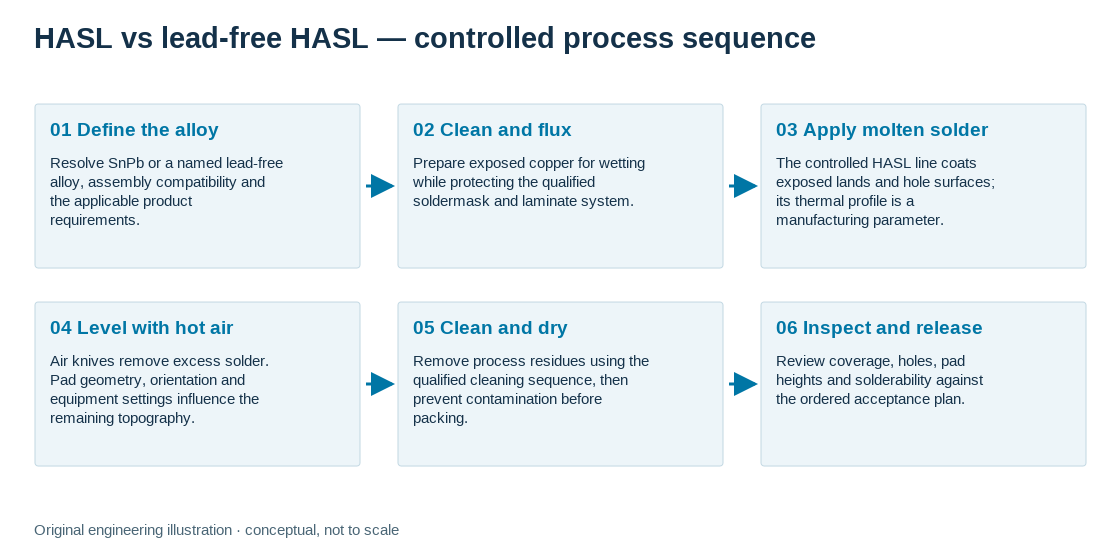
- Define the alloy
Resolve SnPb or a named lead-free alloy, assembly compatibility and the applicable product requirements.
- Clean and flux
Prepare exposed copper for wetting while protecting the qualified soldermask and laminate system.
- Apply molten solder
The controlled HASL line coats exposed lands and hole surfaces; its thermal profile is a manufacturing parameter.
- Level with hot air
Air knives remove excess solder. Pad geometry, orientation and equipment settings influence the remaining topography.
- Clean and dry
Remove process residues using the qualified cleaning sequence, then prevent contamination before packing.
- Inspect and release
Review coverage, holes, pad heights and solderability against the ordered acceptance plan.
The thermal change is a construction-review question
A move to a different solder alloy can change the finishing thermal exposure and wetting behaviour. The board material system includes laminate, interconnections, copper distribution, soldermask and moisture condition. These elements must be considered together. Increasing the Tg label without checking the rest of the construction is not a complete qualification plan.
Ask which process differences are relevant to the actual board: preheat, dwell, levelling, cleaning and dimensional checks. A thin panel with uneven copper distribution can respond differently from a thick, balanced construction. A successful finish on one product does not automatically prove that the same conditions suit another.
Distinguish fabrication exposure from assembly exposure. The HASL line creates the bare-board finish; reflow, selective soldering and rework occur later. Review the sequence rather than adding isolated peak temperatures without context. If the product is already qualified, route the change through the applicable engineering-change process and decide what evidence needs to be repeated before the modified board is released.
Lead-free does not automatically solve pad-height variation
Both routes use molten solder and hot-air levelling. Alloy, equipment and settings can change the result, but neither route should be treated as a universally planar film. The meniscus on a large pad, solder around a hole and the shape of a narrow land can differ even within one board.
When comparing sample lots, keep geometry and measurement consistent. Measure the same functional features using the same datum and method, and separate board warpage from local pad topography. The height-span tool below calculates a simple descriptive range from your readings. A result within your chosen limit means only that those readings meet that entered comparison window; it is not an IPC lot-acceptance decision.
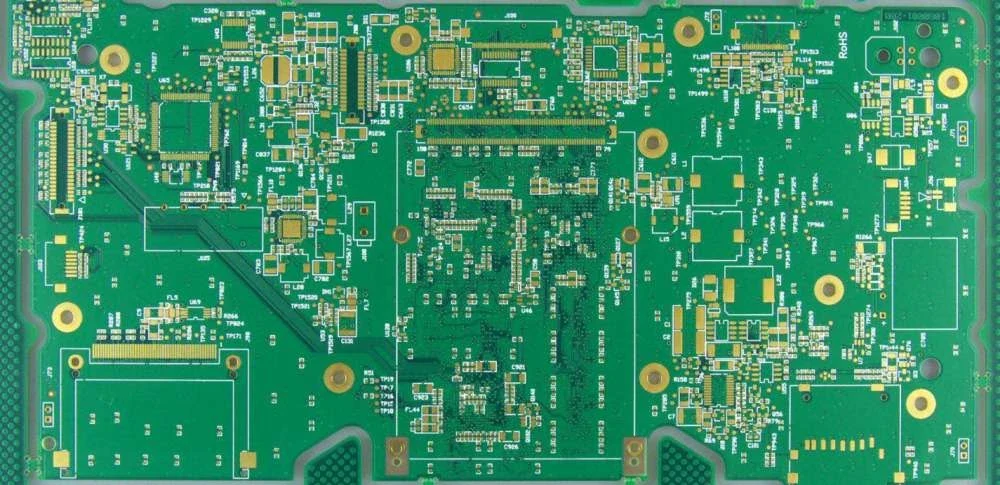
If the assembly process has very little coplanarity margin, consider whether a conformal finish addresses the task more directly. ENIG can be a candidate for flat solderable lands, while OSP may suit a tightly controlled assembly route. Select between these using logistics, interface requirements and cost, not solely a photograph of bright solder.

Compatibility with solder paste and mixed assembly
The finish alloy becomes part of the soldered interface. Its interaction with the paste, flux, component termination and thermal cycle should be reviewed by the assembly team. A change from a SnPb process to a lead-free process is not adequately described by selecting a different checkbox on the bare-board order.
For mixed technology, include reflow on both sides, through-hole operations and any hand repair. Identify whether the product has a legacy component or process constraint. If mixed alloys are intentionally permitted, document the permitted combination and the evidence used to accept it. Do not assume that a finish can be changed independently of the assembly specification.
Useful qualification evidence may include wetting observations, representative joints, cross-sections where justified and electrical or environmental tests relevant to the product. The test set should follow the change risk and the customer's acceptance framework. A purely cosmetic comparison cannot establish joint reliability, and a single successful hand-soldered pad is not evidence for an entire production assembly.
Material declarations and regulatory requirements
Lead-free describes an alloy choice; product compliance involves a wider set of materials and requirements. A lead-free surface finish does not by itself certify the PCB assembly or complete product. Conversely, a legacy or specialist product requirement should be resolved using the applicable rules and documented customer requirements rather than assumptions about all electronics.
The European Commission's RoHS information is the appropriate starting point for EU restrictions and exemptions. Ask the responsible compliance team to identify which requirements apply to the product and maintain the required supplier declarations. Keep compliance statements separate from solderability, process qualification and IPC product class.
For procurement, request the finish alloy identification and the relevant material documentation. Prevent an ambiguous “HASL” line from being substituted for the approved lead-free designation. If a drawing, purchase order and quotation disagree, close the discrepancy before release. Traceable instructions are more useful than a broad environmental slogan on a product page.
Compare cost at the order level
The lower-cost route cannot be established from alloy name alone. The supplier's installed process, minimum lot charge, order quantity, panel use and inspection requirements all affect price. Lead-free alloy cost and processing conditions may differ from the SnPb route, while local availability or an unusual requirement can reverse a simplistic ranking.
Use equal quantities and identical board specifications for a comparison. Separate non-recurring setup from per-board allowances. A finish option with a higher setup charge can become less expensive at larger quantities if its running allowance is lower. The budget tool makes that arithmetic explicit using numbers you enter; it does not contain an assumed market premium for lead-free HASL.
Add the cost of justified transition work separately: sample builds, assembly trials, documentation and inspection. Do not charge those activities to every future unit if they are one-time costs, and do not omit them from the first qualification order. This makes a sourcing decision more transparent than comparing two headline unit prices with different included scope.
How to change an existing drawing without losing control
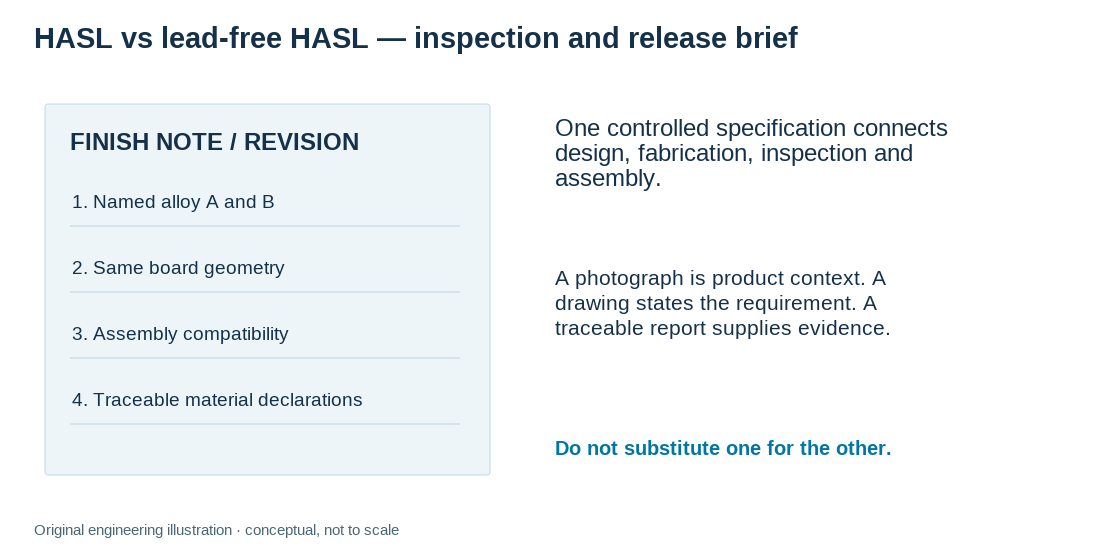
Start by preserving the current approved revision and its exact finish requirement. Create a proposed revision that names the new alloy route and records the reason for change. Review the board material system, assembly compatibility, functional geometry, product requirements and acceptance evidence. Obtain agreement on the necessary validation before releasing production files.
Keep old and new stock identifiable. A board's silvery appearance is not enough to reliably distinguish the alloys, and mixed inventories can defeat an otherwise careful transition. Record lot identity, revision and supplier documentation through receiving and assembly. Update ERP or purchasing defaults as well as the visible drawing note.
For an enquiry, send the current fabrication note and the proposed alternative together. Add the quantity, board construction, assembly route and any fixed customer requirements. Request a HASL alloy and process comparison when you need a technical review; use the broader PCB surface finish selection guide if the real question is whether either HASL route is appropriate for the product.
Compare finish allowances and prepare a useful RFQ
Use the same quantity, currency and included scope for both options. Enter a bare-board allowance only if you want it included; leaving it blank produces a finish-only comparison. Setup and inspection or packing are lot charges, while the finish allowance is per board. Enter zero only for a confirmed zero or already-included item.
The comparison exposes the arithmetic behind your inputs. It does not estimate a supplier tariff, promise a yield saving or approve a complex selective-finish route. Changing quantity or finish choice clears the affected allowances so an old assumption is not silently carried into a new scenario. Exact quotes require fabrication files and an agreed finish specification.
RAYPCB ENGINEERING
Surface FinishSurface Finish Cost Comparison
Loading Surface Finish Cost Comparison…
Keep the finish requirement with the design revision
| Include in the enquiry | Why it matters |
|---|---|
| Fabrication files, revision and quantity | Keeps the quotation tied to the correct geometry and build. |
| Finish system and selective area map | Separates solder, bond and contact functions. |
| Standard revision, metal / film requirement and method | Makes the acceptance requirement interpretable. |
| Assembly sequence, storage and service exposure | Identifies the condition in which the interface must function. |
| Required reports and open decisions | Distinguishes supplied evidence from qualification still needed. |
Use the tool download or email draft to carry the current inputs into a discussion. Attach your fabrication data separately. The Contact button opens the enquiry page; it does not automatically transfer calculator parameters or upload files. Preliminary information is welcome when the finish still needs to be selected.
Questions engineers and buyers ask
Can a legacy SnPb drawing be changed to lead-free HASL without review?
Review the material system, finish process, assembly compatibility, product requirements and acceptance evidence. Keep revisions and inventories traceable.
Is lead-free HASL always more expensive?
No universal percentage applies. Compare the same quantity, board, setup, acceptance and delivery scope using an actual supplier quote.
Is a 227°C alloy melting point the recommended bath temperature?
No. Melting temperature is a material property. Bath operation and board exposure are qualified manufacturing parameters.
Can visual inspection identify the solder alloy?
Do not rely on appearance. Use the controlled specification, lot identification and suitable material evidence.
Continue with a related finish decision
Standards and original technical references
These references support scope and engineering context. Public previews do not contain every licensed acceptance clause. Use the ordered standard revision, agreed drawing and qualified supplier process for production acceptance.