
RAYPCB · ENGINEERING GUIDE
Flex PCB Shelf Life: Storage Evidence and Release Decisions
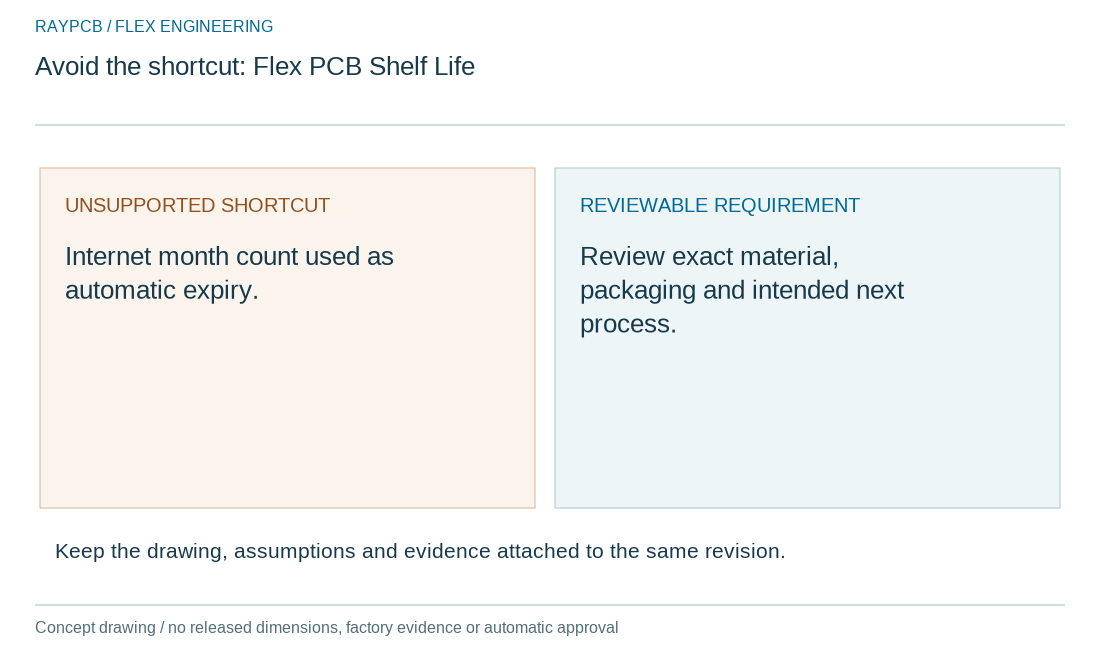
Flex PCB shelf life cannot be assigned from one universal number of months. The relevant material system, surface finish, packaging, storage environment, exposure history and intended next process all matter. Raw adhesive expiry, bare-circuit solderability and populated-assembly storage are different questions.
The elapsed-time tool records calendar days and compares them with your own review interval. It does not declare a circuit expired, dry, solderable or approved for use.
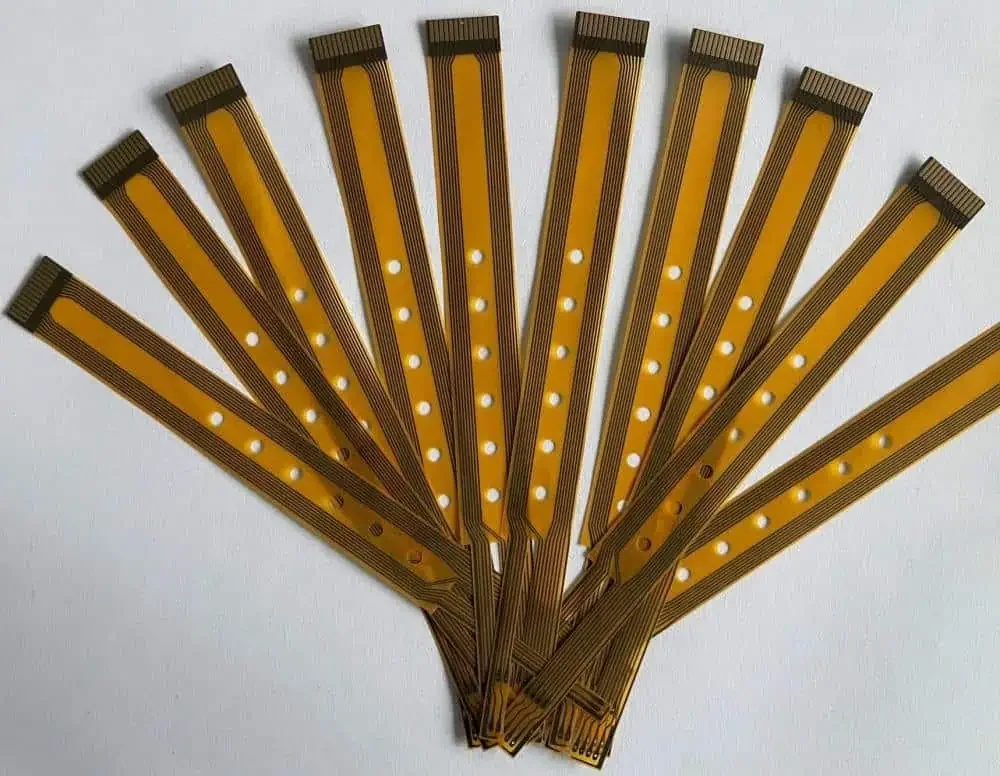
Identify what has been stored
Distinguish copper-clad material, coverlay or adhesive, fabricated bare flex and assembled circuits. Each has different documentation and potential degradation mechanisms. Identify supplier grade, lot, manufacturing or receipt date and the next operation planned.
Use FPC lamination materials for the raw-material inventory. Do not transfer the labeled shelf life of one bonding film to the finished circuit as though they were the same stored object.
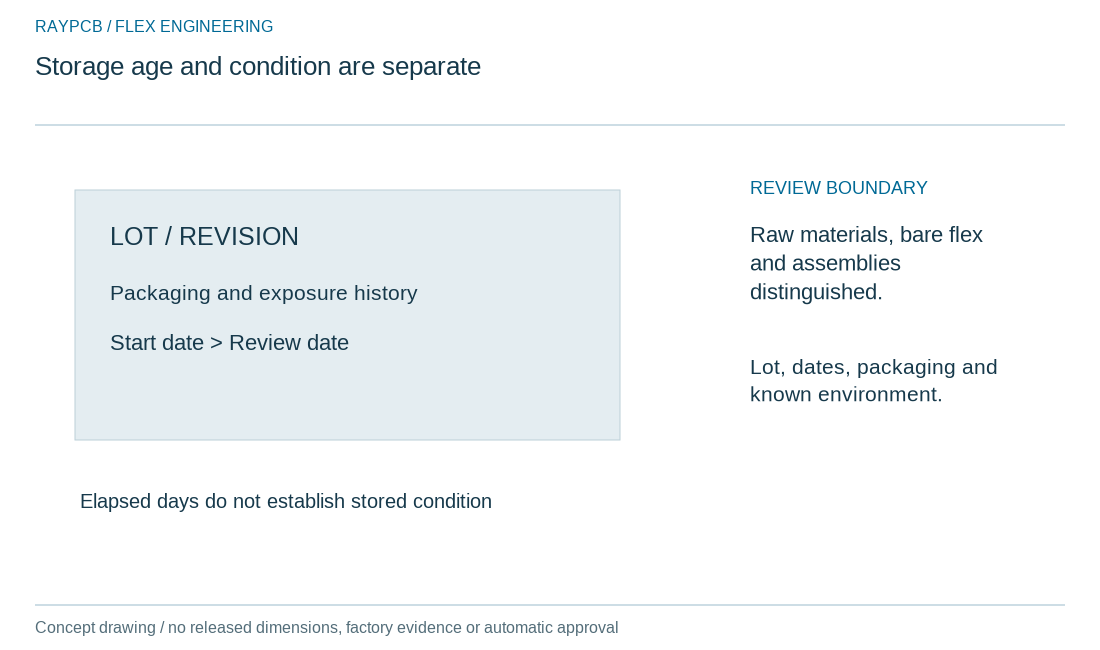
Preserve packaging and environmental history
Record packaging condition, openings, resealing, storage temperature and humidity where available. Keep contamination and handling events visible. A date alone cannot describe the condition of a part that has experienced unknown storage or repeated exposure.
When evidence is missing, state the gap. Retrospectively assigning an assumed storage environment can make the release record appear stronger without actually reducing uncertainty.
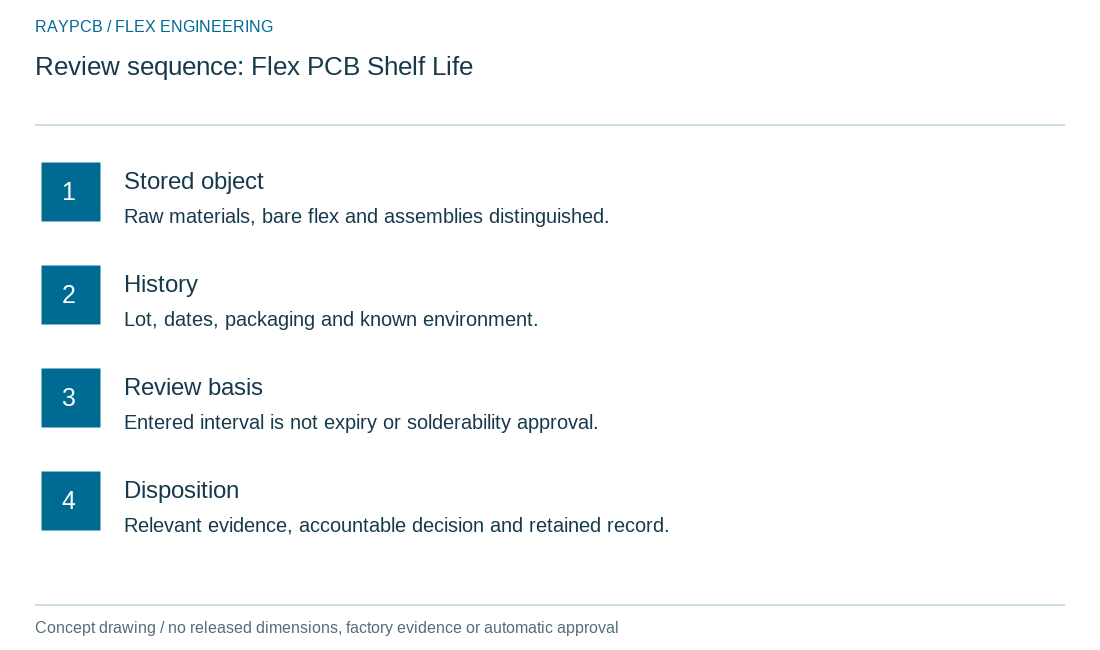
| Review item | What to establish |
|---|---|
| Stored object | Raw materials, bare flex and assemblies distinguished. |
| History | Lot, dates, packaging and known environment. |
| Review basis | Entered interval is not expiry or solderability approval. |
| Disposition | Relevant evidence, accountable decision and retained record. |
Separate moisture management from solderability
Moisture exposure and surface condition can affect different parts of the next process. A treatment intended to address one concern does not automatically resolve another. Review the actual construction and the material or finish guidance before choosing a conditioning route.
For assembly preparation see soldering flexible PCB. This page supplies no generic baking schedule because adhesives, finishes, components and packaging may have incompatible limits.

Use dates as review triggers
The worksheet accepts an identified start date, review date and an internal interval. It reports elapsed calendar days and the remaining time to that entered trigger. Invalid dates and a review date before the start are rejected.
A negative remaining value means the chosen review interval has elapsed. It does not mean the product has failed. Conversely, remaining time before the trigger does not prove that poorly stored material is suitable for release.
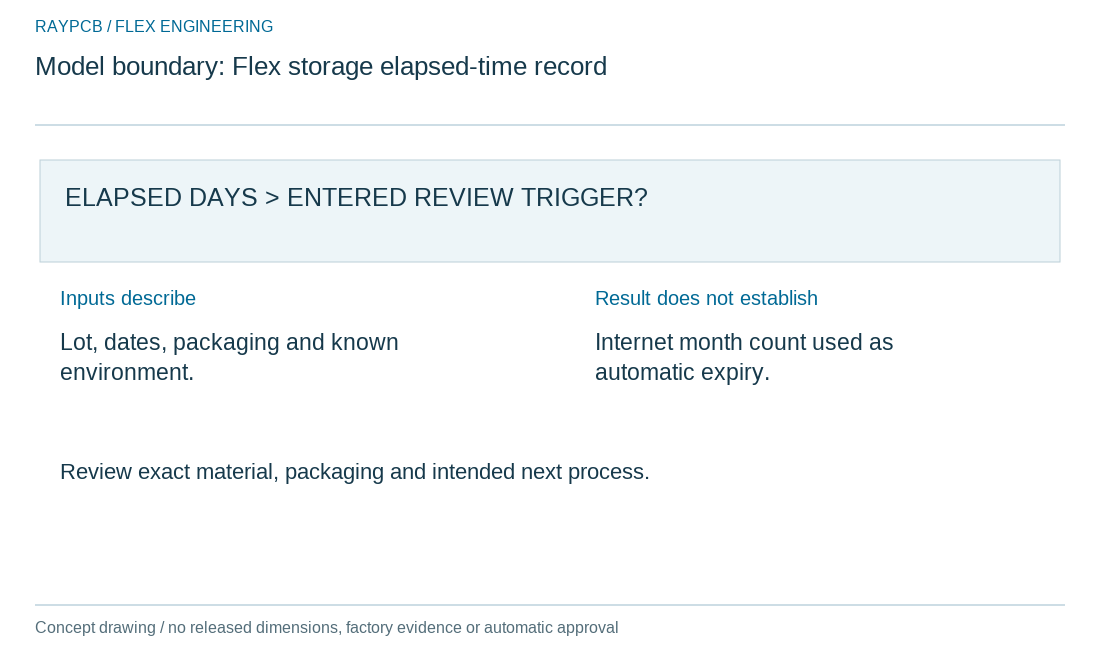
Flex storage elapsed-time record
Flex storage elapsed-time record
Use the current inputs and keep the assumptions
Choose the engineering question before entering data. Every field begins blank. Load example provides teaching values so you can inspect the calculation or workflow; it is not a recommendation for dimensions, materials, operating conditions or prices. The example label remains visible after editing. Reset the worksheet before preparing a record based entirely on your own project inputs.
Keep the units and measurement boundaries consistent. A finished thickness is different from an incoming film thickness; a complete current loop is different from one conductor; a bulk dielectric constant is different from effective permittivity. Identify the source and conditions of the values you enter. If information is missing, record it as an engineering question instead of selecting an attractive assumption.
Read the result together with its limitations. A positive geometric margin addresses only the dimensions entered. An evidence checklist records your statements without checking the underlying documents. A cost scenario adds your allowances without supplying current market prices. None of these tools approves a material substitution, predicts service life or issues a manufacturing quotation.
Editing an input invalidates the current result and disables its download until you run the worksheet again. The text download contains the inputs, results and stated limitations. Processing stays in this browser; the tool does not read CAD, upload project files or send your inputs to analytics. No parameters are automatically passed to Contact. Download and attach the record manually if useful, or contact RAYPCB directly without using the tool.
| Input | What to establish before using it |
|---|---|
| Review reference | Use a nonconfidential revision or scope reference. |
| Storage start · YYYY-MM-DD | Use an identified receipt or release date. |
| Review date · YYYY-MM-DD | Not automatically the current device date. |
| Your review interval · days | Internal review trigger only; not material shelf life or an IPC expiry. |
Agree a condition-based disposition
The responsible quality and process teams should determine what evidence is needed for the intended use. Relevant checks may include documentation, packaging, visual condition and suitably defined process or material verification. Select the method for the concern rather than using a convenient but unrelated test.
Retain hold, requalification, use and rejection decisions with their rationale. Do not silently reset the storage clock when material is repackaged or transferred to another location.
Example: equal age, different histories
Two illustrative flex lots were received on the same date. One remained under documented storage controls; the other was repeatedly opened near an assembly process. Their elapsed days match, but their condition evidence differs.
A useful review keeps those histories separate and decides what additional evidence is required. Applying a single internet shelf-life number to both lots would hide the information needed for a responsible disposition.
Send a storage and next-process brief
Provide the part revision, finish, material construction, lot identity, dates, packaging history and intended assembly operation. Include available supplier instructions and previous exposure or conditioning. Avoid requesting only a yes-or-no answer based on age.
For the broader manufacturing record use flex circuit specification. For a new supply enquiry continue to flexible PCBs, identifying packaging and storage documentation requirements in advance.
Build a condition-based storage review
Create a storage record around the actual object and lot. Raw film, adhesive, fabricated bare circuit and populated assembly are different items with different relevant documentation. Identify the current revision, material or finish, receipt or release date and the next operation before discussing whether the item is suitable for use.
Preserve the known environmental and handling history. Packaging condition, openings, resealing, contamination and temperature or humidity records can matter more than elapsed time alone. Record missing history as unknown. An assumed favorable environment does not become evidence merely because it is written into a spreadsheet.
Distinguish review dates from expiry dates. A planned interval can trigger inspection or a documentation check without declaring automatic failure. Conversely, a recently received part can still need a hold if its condition or history is unsuitable. The worksheet's elapsed days should support that review, not replace it.
Identify the concern that a proposed conditioning or test step addresses. Moisture, surface condition, adhesive aging and component storage can require different assessments. A treatment that helps one concern may affect another part of the construction. Use material-specific and assembly-specific guidance with the responsible process team.
Avoid generic bake or reconditioning instructions. Exact film, adhesive, finish, components and previous exposures constrain what is appropriate. A flexible appearance or a polyimide label does not establish that the entire stored object tolerates a particular treatment. Preserve any approved conditioning record with the lot.
Agree how evidence leads to disposition. Documentation review, visual examination, relevant process verification and other justified checks should answer the identified concern. Record the decision, responsible authority and limitations. Repackaging or moving the material does not erase the earlier history or automatically restart a supplier-defined period.
For future orders, specify the packaging, identification and storage documentation needed to support your process. Include the planned interval before assembly and any required traceability. This turns shelf-life discussion from an unsupported number of months into a practical supply and quality requirement that can be reviewed and maintained.
Standards, source context and limits
Use references within their stated scope. Official material documentation applies to the identified grade, conditions and revision. A supplier specimen test is not a guaranteed result for a different finished circuit. Connector drawings govern the specified parts; public category descriptions do not replace them.
Agree the applicable controlled standards, revisions, construction requirements and acceptance criteria for the order. IPC-2223 concerns flexible-board design; IPC-6013 concerns qualification and performance of flexible and rigid-flex printed boards. Assembly workmanship and product-level electrical or safety requirements are separate. A standards reference does not establish a RAYPCB certification or prove that a particular test is included.
Archive photographs provide visual context from the existing website. They do not establish the precise material grade, present equipment ownership or results of your project. Original diagrams are explanatory construction and review illustrations, not released fabrication drawings or inspection evidence.
For fabrication scope and the agreed construction requirements, see PCB manufacturing.