
RAYPCB · ENGINEERING REFERENCE
Flux Residue on PCBs: Identification, Risks & Evidence
Separate a visible observation from a chemical identification, then prepare the evidence for investigation.
Original engineering guidance · References checked September 29, 2026
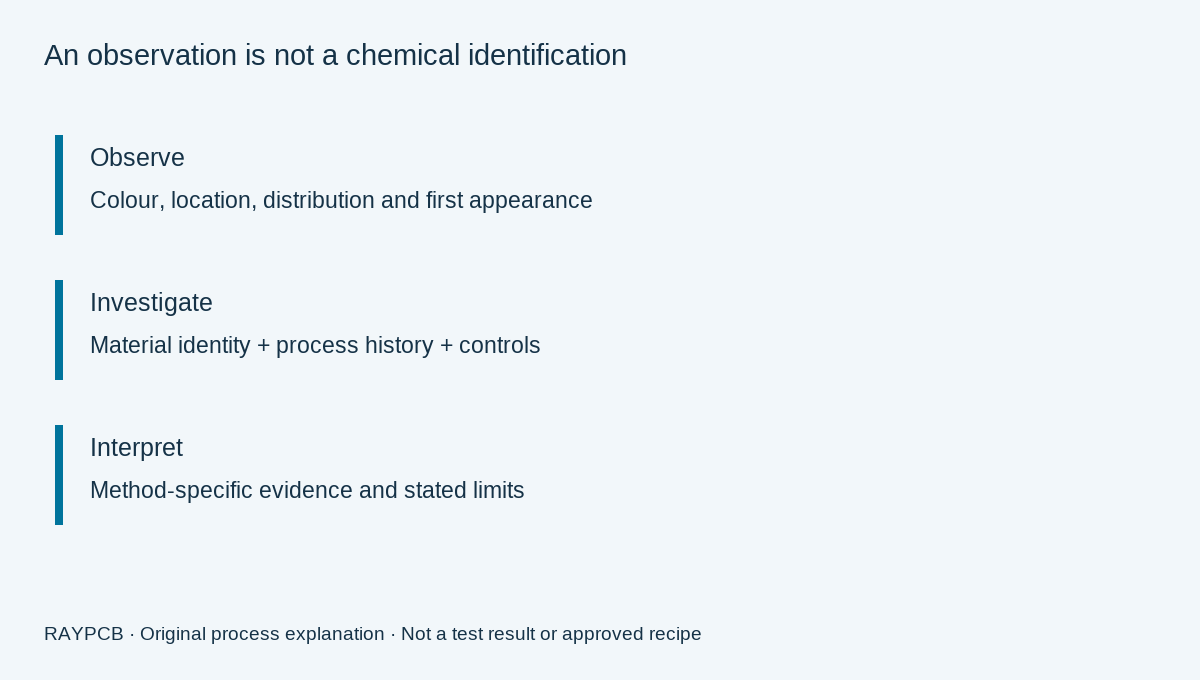
What does flux residue on a PCB actually tell you?
Flux residue on a PCB is material remaining after a soldering operation, but not every visible deposit is proven to be flux. Appearance records where something is visible; it does not establish chemical identity, ionic content, corrosivity or suitability for the intended product. Start by documenting the observation, the materials used and when the deposit appeared.
This page helps a manufacturing or quality engineer prepare a residue investigation. It focuses on evidence and the decision that evidence must support. If your task is to define a complete production wash, use the separate post-solder cleaning process guide. A deposit investigation can inform that process without becoming an unqualified cleaning recipe.
Three questions make an investigation useful: what changed, where is the material, and what performance concern exists? An objection to visible residue, an intermittent leakage complaint and a coating-adhesion problem are different questions. State the question first so the inspection, sampling and laboratory work address the same issue.
Describe the deposit before assigning a cause
Record the board revision, assembly lot and reference designators alongside photographs. Include an overall view showing distribution and a close view with a scale or repeatable magnification. Note whether the observation is on a solder joint, mask, package body, contact surface or beneath a component edge. A photograph without location and process context is difficult to compare later.
Use descriptive terms such as pale deposit, glossy film or scattered particles. Avoid writing corrosive flux as the initial finding unless the relevant analysis supports that conclusion. Different materials and process histories can produce similar appearances, and the same material may look different after heating, washing or environmental exposure.
| Observation | Useful next record | What the observation does not prove |
|---|---|---|
| White or pale material | First appearance, washing history and affected surfaces | A particular ion or cleaning-agent failure |
| Sticky or glossy film | Exact paste or liquid flux, heating and rework history | Whether the residue is electrically acceptable |
| Scattered particles | Distribution, handling stage and comparable controls | That all particles came from soldering |
| Colour change near metal | Exposure history and structural condition | Remaining conductor integrity or repairability |
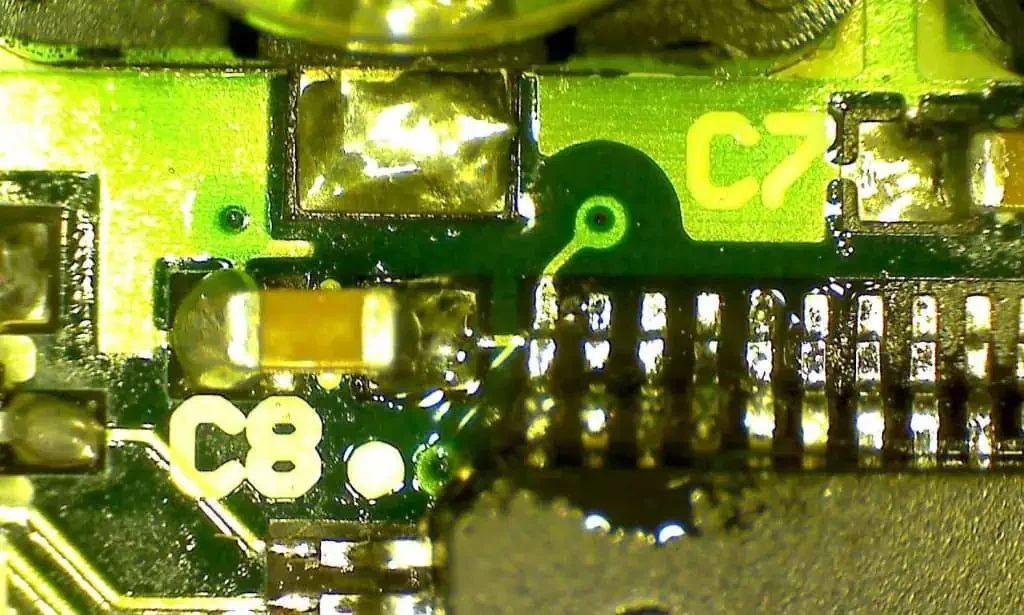
The first appearance narrows the investigation
Separate material seen immediately after soldering from material first noticed after cleaning or drying. Record whether the same features were inspected at both stages. If only the final inspection exists, label the timing unresolved rather than assuming the cleaner created the deposit. That small distinction prevents an observation from becoming an unsupported root-cause claim.
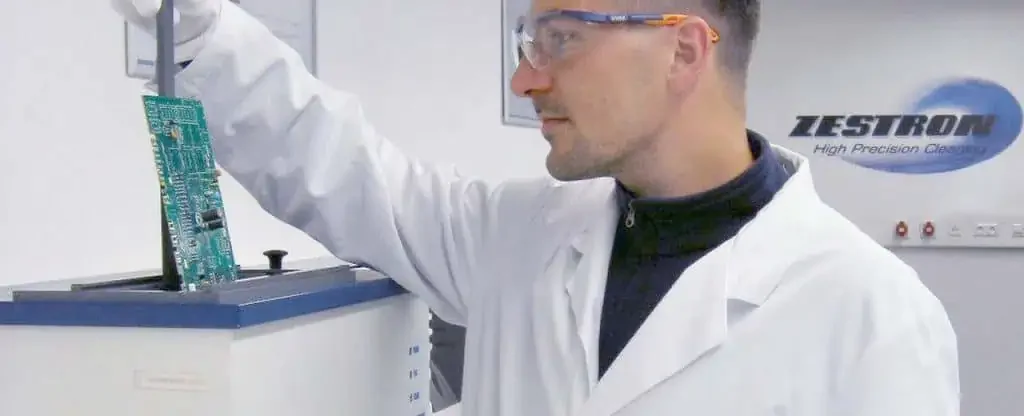
For material appearing after a wash, review the actual flux, cleaner, rinse sequence, loading and drying records. Check for changes in suppliers or revisions as well as equipment settings. Zestron's white-residue investigation discussion illustrates that pale deposits can have several material and process origins; colour alone is not a sufficient diagnosis.
For material first recorded after coating or environmental exposure, retain the pre-exposure evidence and identify the new interfaces. A coating boundary, enclosure leak or changed service condition adds information that is absent from a simple after-solder photograph. Keep chronology explicit, including any repair or attempted cleaning that occurred before the sample reached the investigator.
Follow the actual material trail
Collect the solder-paste and added-flux identities, supplier document revisions and lot references that apply to the assembly. A purchasing description such as no-clean paste is not enough to distinguish two formulations. Include any liquid flux used during touch-up, because a production solder-paste record may not describe the material at a repaired joint.
The cleaner and any rinse additives also belong in the record when used. Identify the approved process instructions and what was actually recorded for the affected batch. If those differ, retain both rather than silently replacing the production record with the intended settings. The discrepancy may be important to understanding the observation.
The no-clean flux guide addresses the conditions for leaving a processed residue in place. Its label is not a diagnosis for an unknown deposit. Equally, a water-soluble designation does not tell the investigator whether an actual wash reached and removed material from a particular hidden location.
Preserve a comparison that can answer the question
Before intervention, agree which specimens remain as found and which can be used for a controlled trial. Record sample identifiers and handling conditions. A cleaned specimen may help evaluate removal, but it cannot replace the original evidence of distribution and chemistry. Where material is limited, agree the sequence of examinations before consuming the sample.
Choose comparisons deliberately. Another board from the same lot may help assess distribution; an unaffected lot may help investigate a change; a representative processed coupon may answer a defined materials question. These comparisons are not interchangeable. State what each one controls and what differences remain between it and the product under investigation.
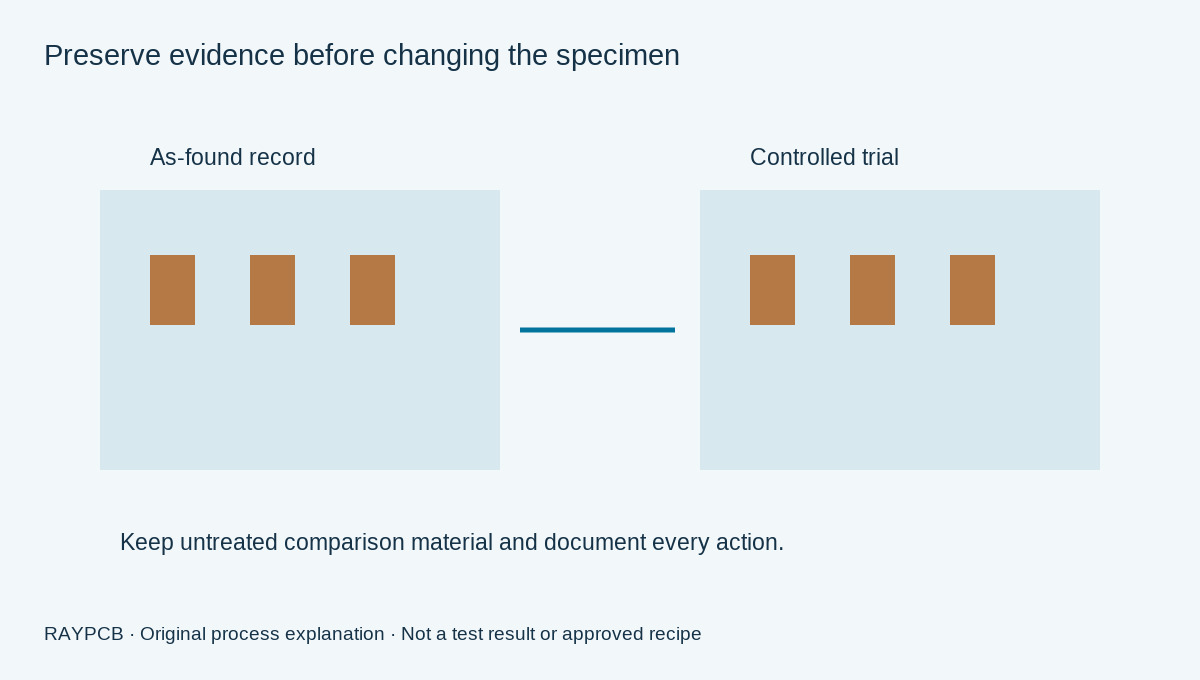
For a deposit beneath a component, discuss access before selecting an examination method. Removing the component can alter the location or material, while leaving it installed can restrict observation. The investigation plan should document that tradeoff and identify which evidence must be captured before any destructive action is taken.
Match the test to the uncertainty
A useful test request describes the question, the specimen and the intended interpretation. Asking whether a board is clean can be too broad: you may need to identify a deposit, compare a controlled process or investigate electrical behaviour under specified conditions. The method must be suitable for that narrower task, with its limitations recorded.
Visual examination helps map location and appearance. Chemical methods may help characterize collected material. Electrical methods address behaviour within their own specimen and exposure conditions. None should be described as a universal answer to every contamination concern. The ionic contamination testing page explains the distinction between extraction results and broader reliability evidence.
Keep units, preparation, extraction or conditioning details and the acceptance basis with the result. A number copied into a report without its method can be misleading. Compare results only after confirming that differences in specimen, preparation and measurement do not explain the apparent improvement or deterioration.
Build a residue observation and evidence record
The worksheet turns the visible observation into a structured investigation brief. It asks about timing and distribution, then checks whether material identities, process history, preserved samples and a question-specific test plan are documented. It does not identify a chemical from a photograph or assign a universal pass/fail cleanliness limit.
RAYPCB ENGINEERING
Assembly CleaningResidue observation and evidence record
Loading Residue observation and evidence record…
Start with your own records or load the clearly marked illustrative example. An open item identifies missing evidence, not a numerical risk score. A result with no open items still requires technical interpretation by the people responsible for the product and process. Mark a field documented only when the referenced evidence is available.
Download the current brief for your own records or attach it manually to an enquiry. Inputs remain in the browser during tool use. Changing an input invalidates the previous result and its download and email links, so the saved brief reflects a deliberate new review. Contact remains available without completing the worksheet.
Keep observations, hypotheses and conclusions separate
An investigation record is clearer when it distinguishes what was seen from what might explain it. Write the observation first, list the candidate explanations and describe the evidence that would distinguish them. Close a hypothesis only when the test or record actually addresses it. This also makes the next investigation easier to reproduce.
For example, a pale deposit found after cleaning could trigger a comparison of material changes and rinse history. That is a reason to investigate those factors, not proof that a particular rinse setting caused the deposit. A controlled comparison needs a defined change, comparable specimens and an evaluation that can detect the expected effect.
If the observation includes suspected loss of metal, move to the circuit-board corrosion assessment before treating the task as cosmetic cleanup. Removal of a deposit and assessment of the underlying structure are different decisions. A cleaner surface cannot establish the original condition of a conductor that is no longer present.
Translate a finding into a controlled process decision
Possible outcomes include retaining a residue under an established basis, qualifying a revised removal process, changing a material or extending the investigation. The report should state which decision is supported and where uncertainty remains. Do not turn a successful trial on one accessible area into approval for every geometry on the assembly.
For localized rework, the flux-removal trial guide helps define the intervention boundary and checks. For continuing production, route the finding into the manufacturing instruction, monitoring plan and change-control record. Keep the actual material revision and relevant assembly restrictions attached to that change.
An effective closure also identifies what will be observed on subsequent lots and what would reopen the decision. A changed flux, new low-clearance package or different downstream surface process can matter even when the assembly still carries the same general product name. Define responsibility for reviewing those changes rather than leaving it to informal judgement.
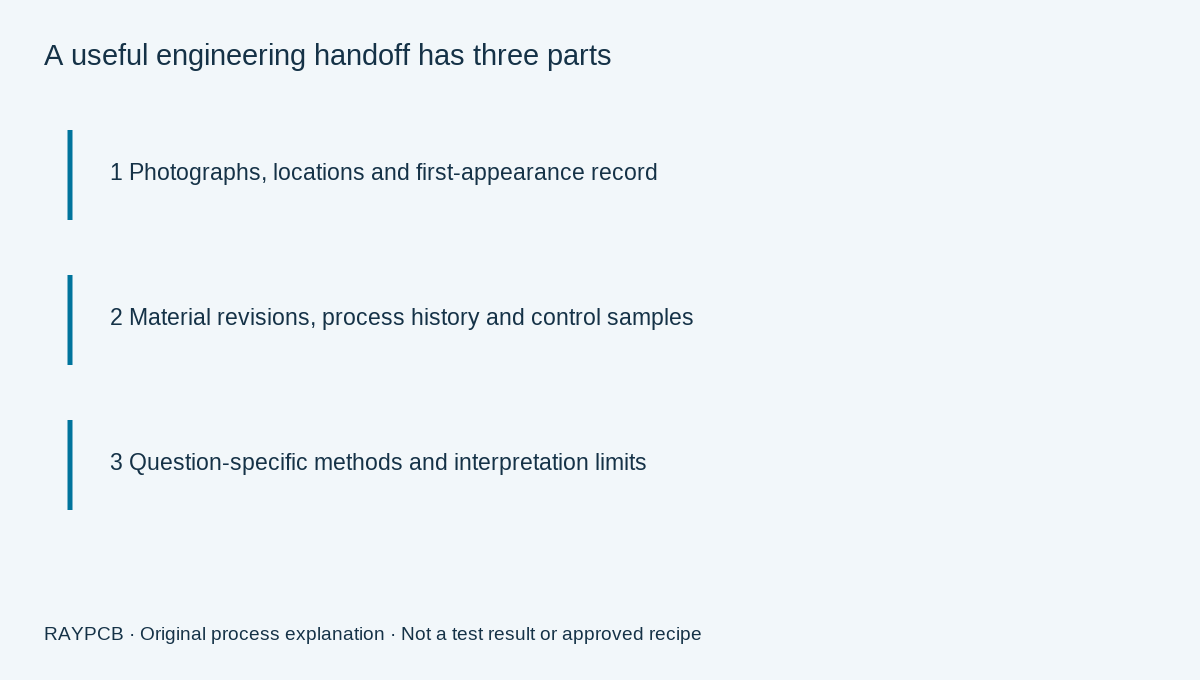
Send evidence that supports an assembly review
For a PCB assembly project, useful enquiry information includes the board revision, material restrictions, photographs with locations, first-appearance stage and the required acceptance basis. Identify whether the question concerns a proposed build, a process change or a returned assembly. That distinction helps scope the technical discussion and any quotation.
You can discuss the assembly and residue requirements without first running the worksheet. Include the specific decision you need and the documents already available. Do not send an unlabeled photograph as proof of a particular contaminant, and do not assume that a request for review confirms the availability of every analytical method or repair service.
Questions about PCB flux residue
Is white residue always failed cleaning?
No. It is a visible observation with several possible explanations. Record when it appeared, the surfaces involved and the material and process history. Use a suitable investigation to distinguish the candidates before changing production instructions.
Can a visually clean board still need additional evidence?
Yes. Visual inspection has limits, particularly at hidden locations and for material that is not easily visible. The relevant electrical, chemical or process evidence depends on the question and the product requirements, not solely on appearance.
Does this tool classify a residue as corrosive?
No. It organizes observations and missing records. Chemical identity, electrical implications and disposition require suitable evidence and engineering interpretation. The worksheet neither diagnoses a failure nor approves the assembly for service.
Bring the assembly and process requirements together
Send the board revision, construction, quantity and the cleaning or residue question you need reviewed. Identify unresolved requirements so the response can address them.
Send requirements for reviewOptional: attach the downloaded worksheet manually. This guidance does not certify a design, approve a shipment or replace the applicable authorized standards.