
RAYPCB · ENGINEERING & PROCUREMENT
NPI First-Build Readiness: Close the Hold Points Before the Pilot Lot
NPI first-build readiness is the decision that a defined pilot or initial assembly lot can proceed under agreed controls. It is narrower than the full NPI lifecycle. The aim is to identify the few unresolved items that could invalidate the build, create uncontrolled material commitments or prevent useful test evidence. This guide helps an OEM and manufacturing partner run that immediate release review without claiming that a checklist guarantees first-time success.
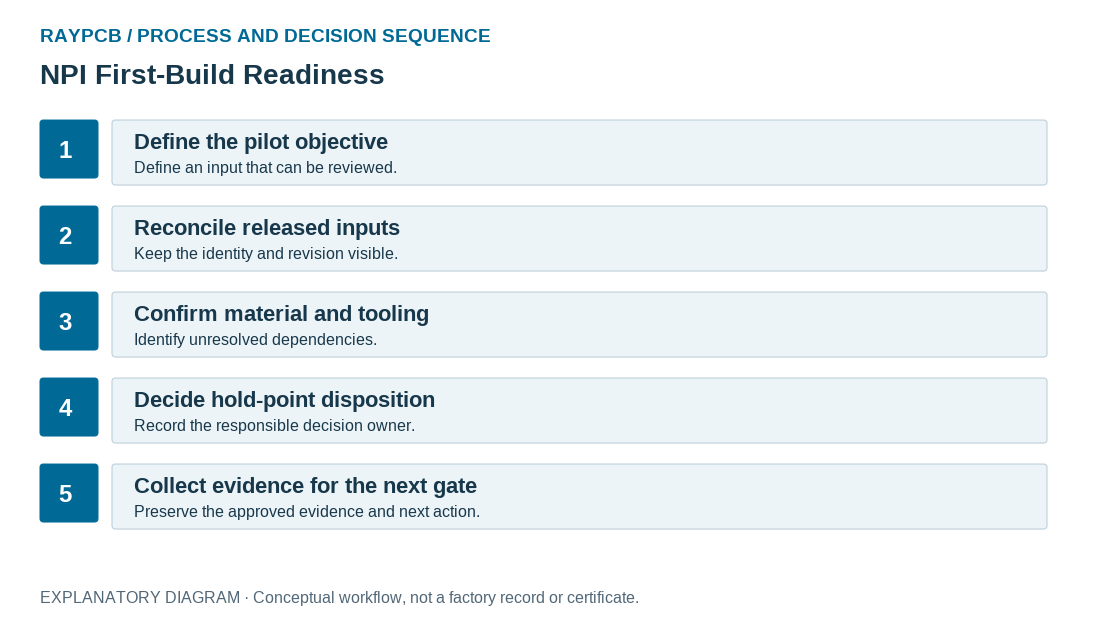
Your task: Define the pilot objective. Use the first-build hold-point planner to record the next decision.
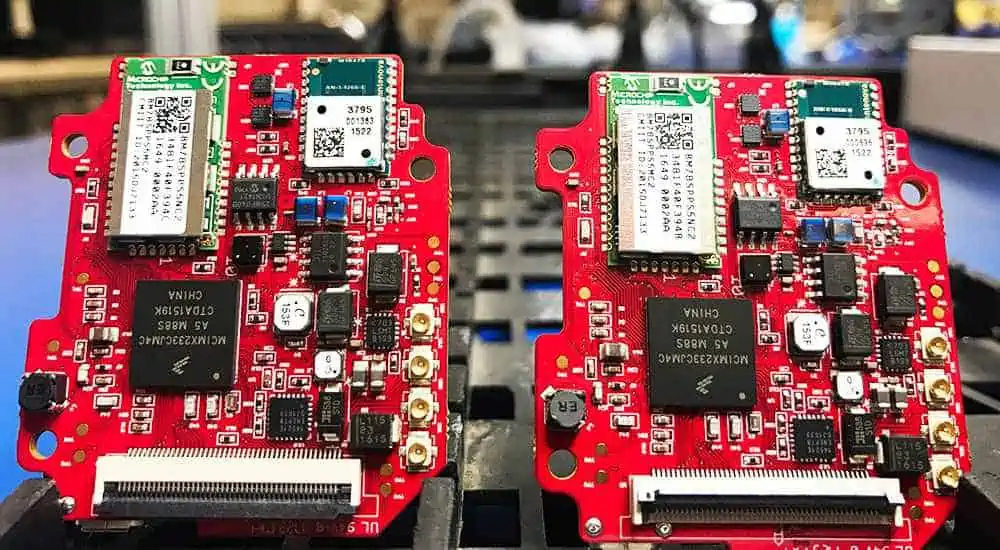
Define what this particular lot must prove
State the build objective, revision, configuration, quantity and sample allocation. A pilot for assembly-process learning differs from a product validation lot or a customer demonstration. Identify which results will support the next decision.
Do not let the phrase first build imply production approval. Some units may be engineering samples with controlled deviations. Record those deviations and prevent them being mistaken for the final product definition.
For the overall progression between development and repeat production, use the NPI manufacturing guide. For a reusable general template, the existing electronics NPI checklist is the resource owner. This page focuses on the immediate hold-point meeting.
Check one coherent release package
Reconcile PCB fabrication data, BOM, placement, assembly drawing, firmware and test instructions against the selected revision. Include mechanical or harness data if the lot includes integration. Use a manifest rather than a folder name that says final.
List known deviations and temporary modifications. State whether they are permitted for the entire lot or only selected samples. A laboratory workaround should not become an undocumented production operation.
Assign a release owner who can confirm the package. If different teams own parts of it, record their approvals and resolve conflicts before issuing the build instruction.
Identify the materials that can stop the lot
Confirm usable parts, bare boards, packaging and any special consumables required by the route. Distinguish received accepted material from expected deliveries. Identify shortages and proposed alternatives.
An alternative should have the relevant engineering and documentation approval before use. If the quantity is reduced or the build is split, revise sample allocation and test objectives accordingly.
Use component kitting for the physical material handoff. A complete kit is a prerequisite for the planned route, but it does not establish that the data or test system is ready.
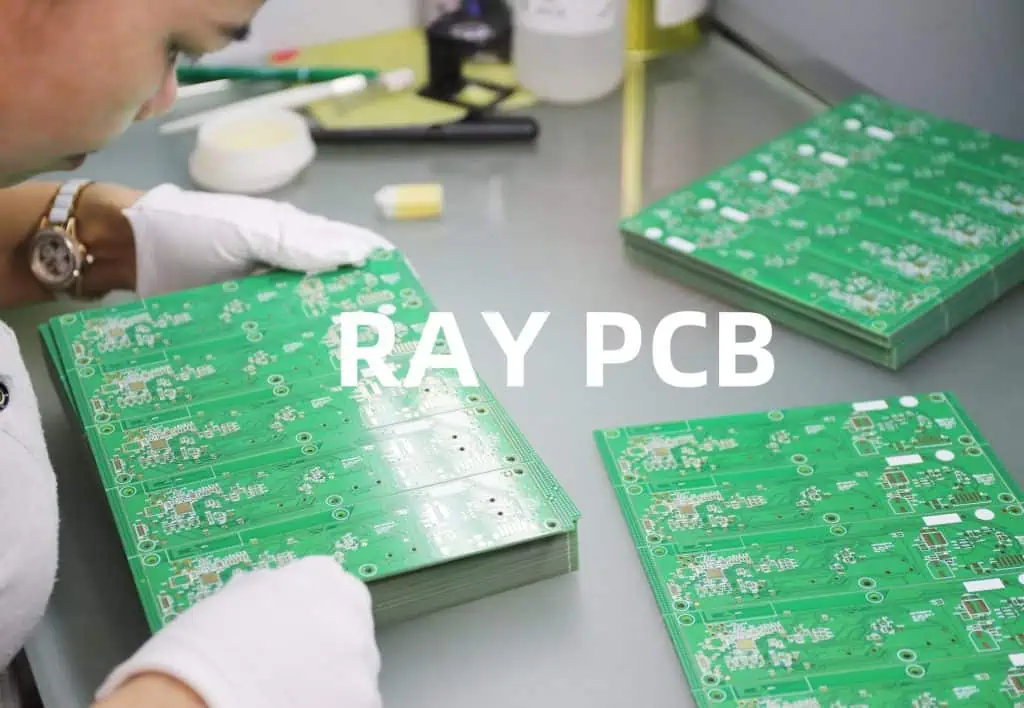
Check tooling, programs and test readiness
Verify that the required stencil, fixtures, programs and instructions are prepared for the actual revision. If a test fixture is still under development, define how that affects the lot's objective and release.
Programming needs the approved image and configuration, with a verification method. Functional tests need conditions, limits and failure disposition. Identify who will investigate unexpected results during the build.
The hold-point planner exposes open categories and prepares a local action list. It does not read manufacturing files or issue a production authorization.
First-build hold-point planner
First-build hold-point planner
How to use and interpret this worksheet
Choose a narrow review boundary before filling in the worksheet. Use one product revision, one proposed build or one supplier decision. If several configurations differ, keep separate records or explain precisely which evidence applies to each. A short reference is enough; the tool does not need drawings, customer names, confidential part lists or passwords.
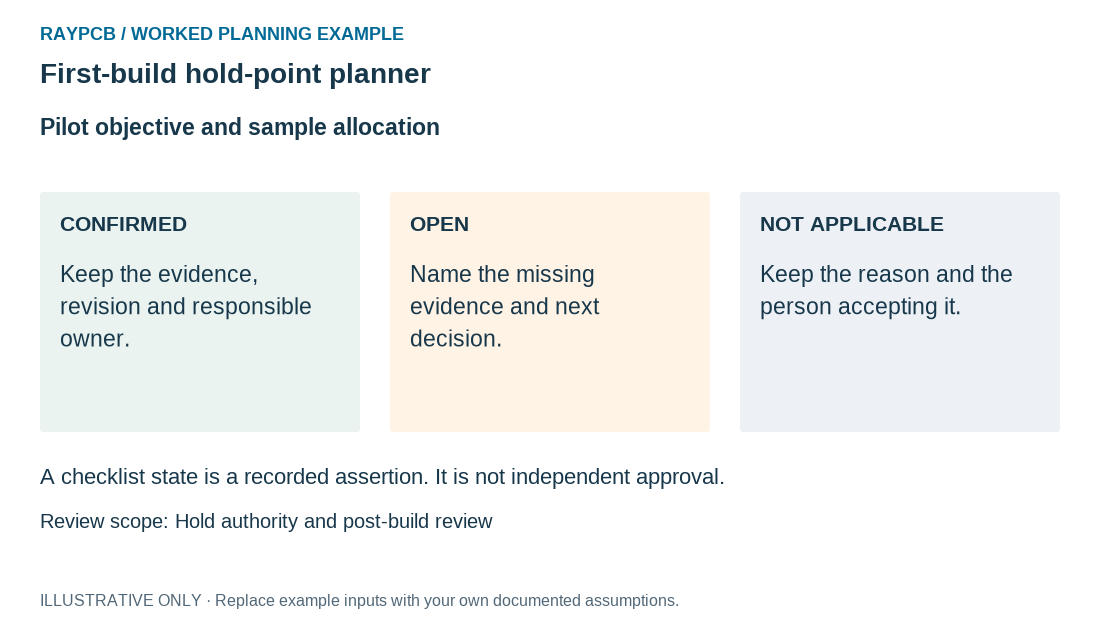
For every item, distinguish confirmed evidence from an unresolved assumption. Confirmed means that the responsible person has reviewed the relevant information, not merely that a document exists somewhere. Open means the decision or evidence is still missing. Not applicable requires a rationale because it is an applicability decision, not a shortcut to completion.
Record a concrete next action with an owner and a target decision point. For example, replace ask engineering with obtain the approved revision from the design owner before material release. The useful output is an actionable handoff, not a readiness percentage. No weighted score is used, because the consequence of one mandatory gap may exceed that of several completed items.
Load example only to learn the controls. Example mode remains clearly labeled even if you edit its values. Clear the form before entering your own review. Changing an input invalidates the old result and disables its download until you generate a new record. Download the current text if it helps your discussion; it is not automatically added to an enquiry.
Keep supporting approvals and measured results in the controlled project system. This worksheet stores nothing between visits and does not verify files, supplier statements or legal applicability. A completed record can support a review meeting, but the authorized team remains responsible for the release decision.
Use confirmed only when the responsible person has the corresponding evidence. A majority of completed items cannot compensate for one unresolved mandatory prerequisite.
Keep a decision record with the review
Use this record to connect the discussion to supporting information. Record the source, revision and reviewer for each item. Confirmed means the responsible person has reviewed the evidence; it does not mean this website has verified it. Keep confidential documents in your approved project system.
| Review topic | Record to retain | When it remains open |
|---|---|---|
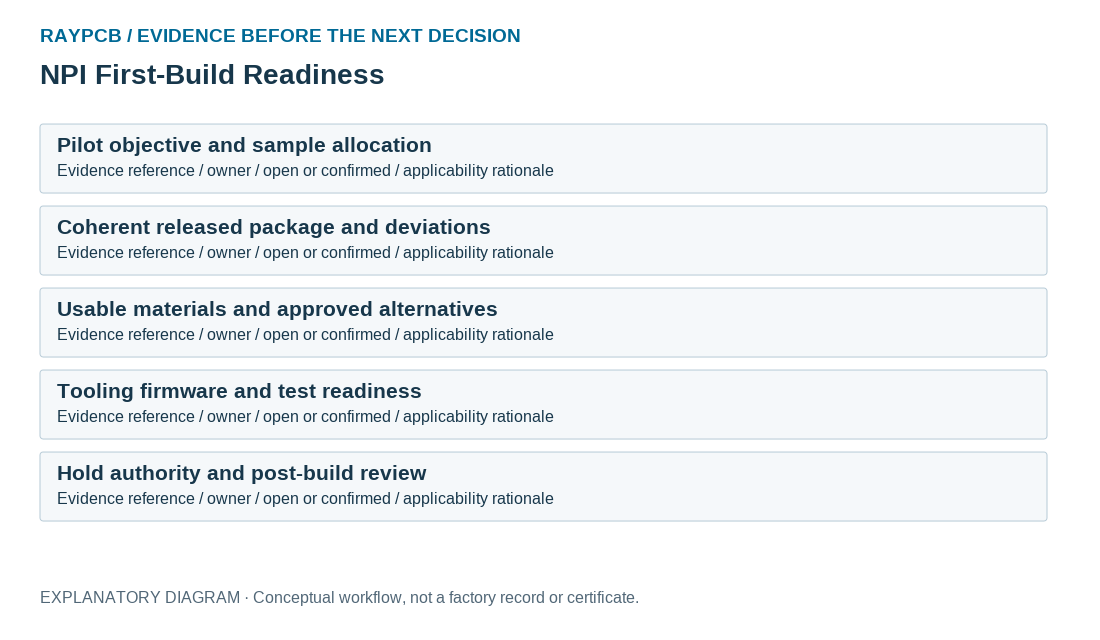
| Pilot objective and sample allocation | Identify the controlled scope and the person authorized to approve it. Keep the current reference together with the intended decision. | Clarify the boundary before treating the review as a release instruction. |
| Coherent released package and deviations | Reference the actual file, data source or agreed requirement, including its revision or date and the person who reviewed it. | Request the missing evidence and identify which downstream decision depends on it. |
| Usable materials and approved alternatives | Record the conditions and assumptions that make the evidence applicable. Separate a proposed value from an approved requirement. | Keep the assumption visible and define whether the next activity may proceed under a bounded exception. |
| Tooling firmware and test readiness | Identify responsibility for the next operation and the evidence expected afterward. Distinguish preparation from a completed result. | Assign a named role and an agreed decision point; do not turn an unanswered question into an approval. |
| Hold authority and post-build review | Record the final disposition, affected quantity or revision and the authority accepting it. Preserve the reason for any exception. | Retain the item in the action list and review its consequence before committing work or materials. |
Review the record again when the product, supplier proposal or supporting data changes. A result from an earlier revision is historical evidence, not automatic approval for the current one. If an item is not applicable, retain the reason and the person who made that decision.
Define stop, review and proceed conditions
Decide which issues require a full hold, which allow a bounded engineering build and which are administrative follow-ups. The distinction must be made by the authorized project team, with the consequence understood.
If a temporary acceptance is used, specify affected units, permitted deviation, required follow-up and expiry. Do not leave an open-ended waiver in meeting notes.
For a hypothetical pilot, an unfinished cosmetic label may be acceptable for internal testing, while an unapproved power connector could invalidate electrical and mechanical evaluation. The example illustrates consequence-based decisions rather than a universal ranking of issues.
Prepare evidence collection before the first unit
Define unit identification, inspection records, test results and failure categories. Separate first-pass outcomes from rework and retest. Decide who receives the data and when the team will review it.
Retain enough configuration information to connect a result to the actual board, software and setup. If engineering modifies a sample, mark it and record the change. Do not combine modified and unmodified results as though they came from one unchanged configuration.
The quality assurance page connects methods and limitations. Use the IPC standards framework to discuss relevant process and workmanship documents; pilot evidence and final product approval remain distinct.
Plan the post-build decision before starting
Set a review that compares results with the stated objective. Identify the evidence needed to correct the design, improve the process, repeat an experiment or proceed to another stage. A shipment date is not the only outcome.
Close issues with a documented action and revised baseline where necessary. If a test-system problem caused failures, distinguish its correction from a product design change. Preserve the original observations so the learning remains credible.
Use hardware prototype development when the next step is another experiment, and PCB assembly order release when preparing a subsequent controlled lot.
Questions before the readiness meeting
Can a pilot run with open issues? Sometimes, under an explicit bounded plan that preserves the intended learning and controls the consequences. Mandatory unresolved conditions should not be hidden by a score.
Does passing the pilot authorize volume production? Compare the evidence to the next stage's entry criteria. A pilot can leave design, process or supply questions open.
What should RAYPCB receive? Send the build objective, controlled files, material status, test plan and open-issue list with your PCB assembly enquiry. For bare-board work use PCB manufacturing. The planner is optional and does not automatically submit or approve the lot.