
RAYPCB · ENGINEERING & PROCUREMENT
RoHS Compliant PCB Assembly: Material Evidence and Change Control
RoHS compliant PCB assembly requires a controlled material and evidence chain for the applicable product and market. Lead-free solder is only one part of that discussion. Components, board materials, finishes, mechanical items and approved exemptions may all need review. This guide helps an OEM organize the assembly-related evidence and responsibilities without treating a green label, a single test or a webpage checklist as a complete legal compliance determination.
Your task: Determine applicable product scope. Use the rohs evidence gap checklist to record the next decision.
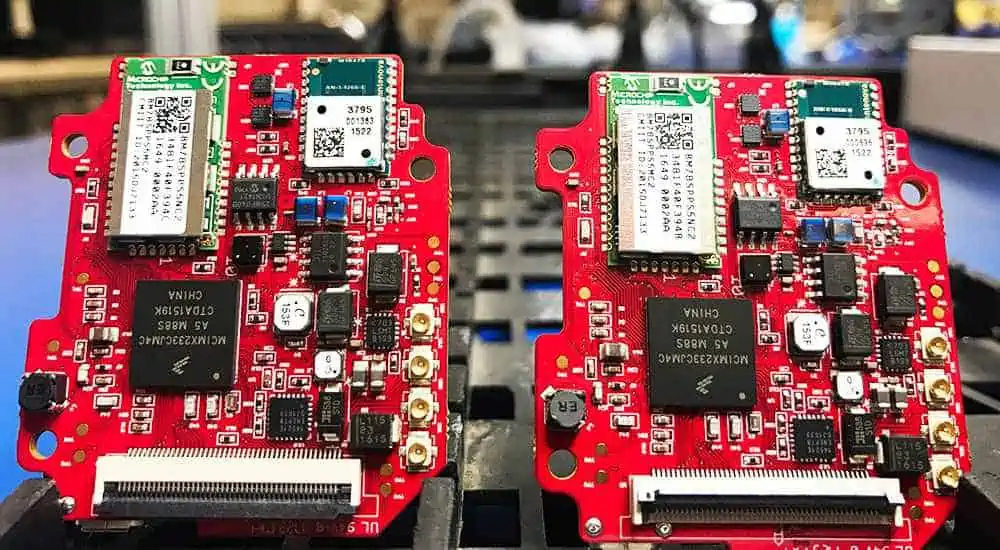
Determine applicability before collecting declarations
The European Union RoHS framework restricts specified substances in applicable electrical and electronic equipment, with defined exclusions and exemptions. Product category, intended market and relevant dates matter. Assign a qualified owner to determine applicability for the actual product.
The European Commission RoHS overview identifies the current ten restricted substances and links to legislation and exemption information. Check the applicable legal text and amendments at the time of release. This page does not provide a product-specific legal conclusion.
A component or PCBA can be part of the evidence supporting a finished product. Clarify what documentation the assembly supplier will provide and what the equipment manufacturer must complete for the final product.
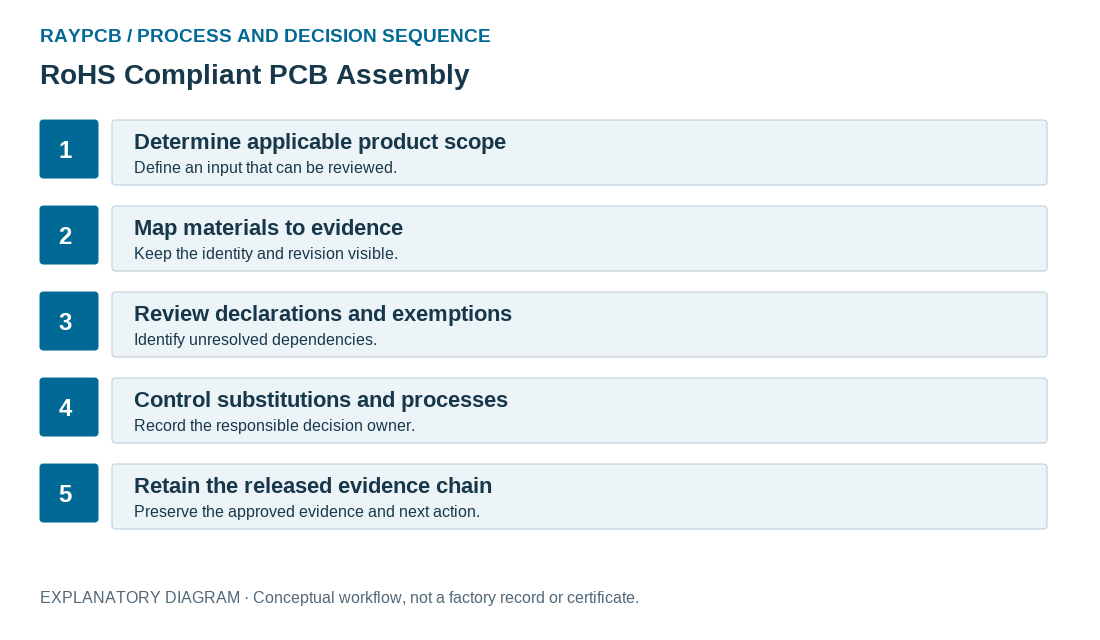
Do not reduce RoHS to solder alloy
Lead-free solder does not establish the status of every homogeneous material in the product. Components, finishes, plastics, cables, coatings and other items may require evidence according to their role and the applicable requirements.
RoHS and halogen-free are different concepts. A claim about one should not be substituted for a claim about the other. Similarly, a workmanship inspection does not determine the chemical composition of all constituent materials.
Use a material evidence matrix connected to the released BOM and relevant non-BOM consumables or mechanical items. Identify the evidence source, part or material covered, revision or date and any stated exemption. Missing coverage remains an open issue.
Request declarations with a defined identity and scope
A useful declaration identifies the supplier, the exact part or material family covered, the applicable requirement and relevant conditions. Check that the document applies to the ordered manufacturer part number and current configuration.
A general corporate statement may not resolve a specific part question. If a declaration covers a family, confirm whether the purchased variant is included. Keep the document reference with the approved BOM or material record.
A hypothetical assembly may have declarations for every electronic component but no evidence for a separately sourced cable or coating. The completed board still needs that gap reviewed if those materials are within the required scope.
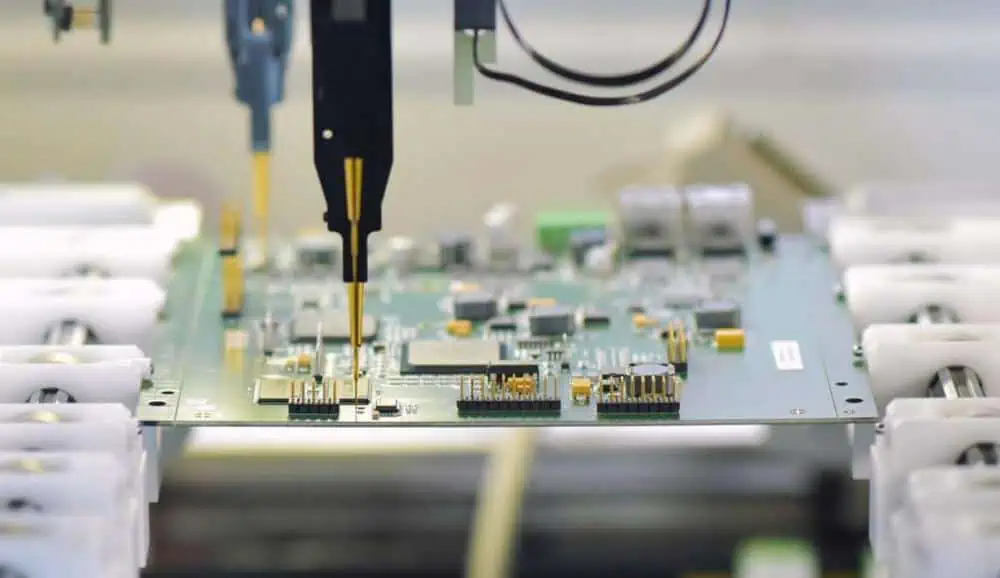
Handle exemptions as controlled claims
An exemption has defined wording, scope and conditions. Applicability can depend on product category and dates, including renewal provisions. Do not copy an exemption identifier from an old declaration without checking whether it applies to the actual use.
The Commission's official resources link the relevant exemption information. A qualified compliance owner should document the basis for relying on an exemption and review it when the product or requirement changes.
The online checklist records evidence gaps and ownership. It does not decide exemptions, evaluate chemical concentrations or generate a declaration of conformity.
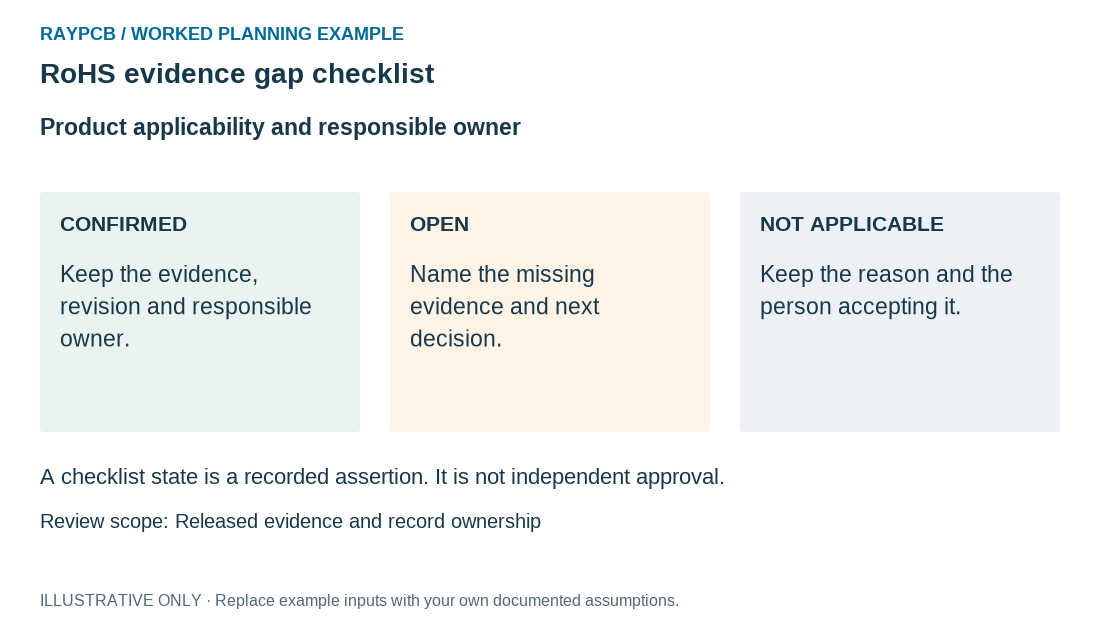
RoHS evidence gap checklist
RoHS evidence gap checklist
How to use and interpret this worksheet
Choose a narrow review boundary before filling in the worksheet. Use one product revision, one proposed build or one supplier decision. If several configurations differ, keep separate records or explain precisely which evidence applies to each. A short reference is enough; the tool does not need drawings, customer names, confidential part lists or passwords.
For every item, distinguish confirmed evidence from an unresolved assumption. Confirmed means that the responsible person has reviewed the relevant information, not merely that a document exists somewhere. Open means the decision or evidence is still missing. Not applicable requires a rationale because it is an applicability decision, not a shortcut to completion.
Record a concrete next action with an owner and a target decision point. For example, replace ask engineering with obtain the approved revision from the design owner before material release. The useful output is an actionable handoff, not a readiness percentage. No weighted score is used, because the consequence of one mandatory gap may exceed that of several completed items.
Load example only to learn the controls. Example mode remains clearly labeled even if you edit its values. Clear the form before entering your own review. Changing an input invalidates the old result and disables its download until you generate a new record. Download the current text if it helps your discussion; it is not automatically added to an enquiry.
Keep supporting approvals and measured results in the controlled project system. This worksheet stores nothing between visits and does not verify files, supplier statements or legal applicability. A completed record can support a review meeting, but the authorized team remains responsible for the release decision.
Use its output to request missing documents. A set of confirmed boxes represents the user's recorded review status, not independent certification by RAYPCB or this website.
Keep a decision record with the review
Use this record to connect the discussion to supporting information. Record the source, revision and reviewer for each item. Confirmed means the responsible person has reviewed the evidence; it does not mean this website has verified it. Keep confidential documents in your approved project system.
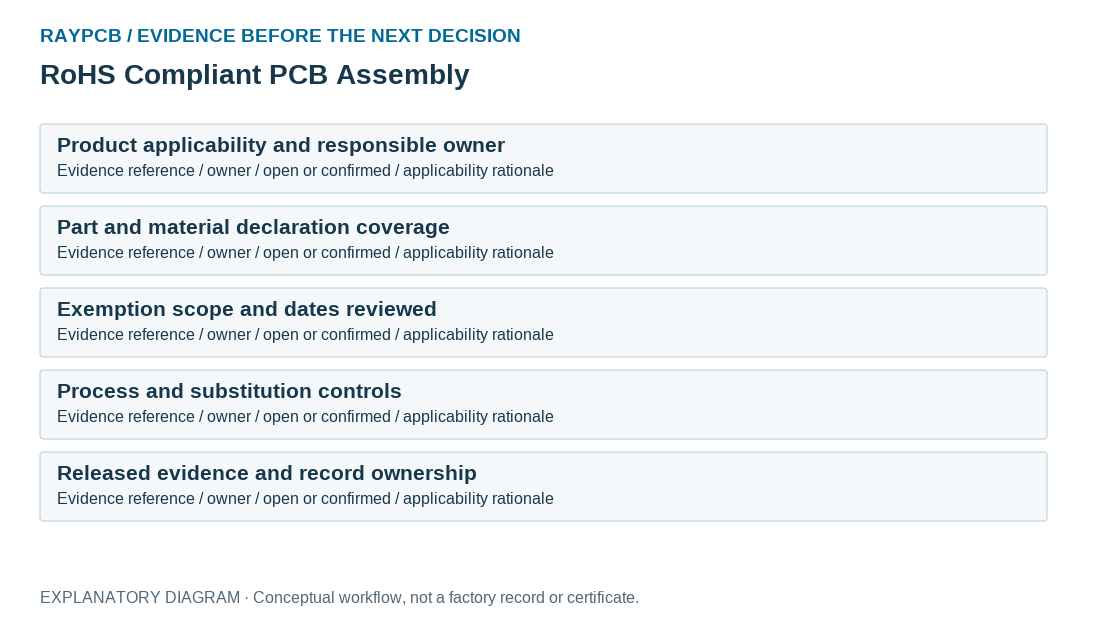
| Review topic | Record to retain | When it remains open |
|---|---|---|
| Product applicability and responsible owner | Identify the controlled scope and the person authorized to approve it. Keep the current reference together with the intended decision. | Clarify the boundary before treating the review as a release instruction. |
| Part and material declaration coverage | Reference the actual file, data source or agreed requirement, including its revision or date and the person who reviewed it. | Request the missing evidence and identify which downstream decision depends on it. |
| Exemption scope and dates reviewed | Record the conditions and assumptions that make the evidence applicable. Separate a proposed value from an approved requirement. | Keep the assumption visible and define whether the next activity may proceed under a bounded exception. |
| Process and substitution controls | Identify responsibility for the next operation and the evidence expected afterward. Distinguish preparation from a completed result. | Assign a named role and an agreed decision point; do not turn an unanswered question into an approval. |
| Released evidence and record ownership | Record the final disposition, affected quantity or revision and the authority accepting it. Preserve the reason for any exception. | Retain the item in the action list and review its consequence before committing work or materials. |
Review the record again when the product, supplier proposal or supporting data changes. A result from an earlier revision is historical evidence, not automatic approval for the current one. If an item is not applicable, retain the reason and the person who made that decision.
Connect process controls to material identity
Approved material must remain identifiable through purchasing, storage, setup and assembly. If leaded and lead-free processes or other differing materials are handled, the relevant segregation and control requirements should be defined for the route.
Process consumables and substitutions need appropriate approval. A material change after the documentation review can invalidate the earlier evidence chain even if the PCB looks unchanged.
Moisture handling, reflow compatibility and workmanship are additional engineering considerations. RoHS material status does not prove that a component will tolerate an arbitrary soldering process. Use manufacturer guidance and the agreed assembly requirements for those decisions.
Understand the limits of testing
Analytical testing can support a compliance assessment, but its scope and method matter. A result for one sample or material does not automatically establish every part in every future lot. Sampling, measurement uncertainty and interpretation require competent review.
Do not describe a screening result as a universal product certificate. Keep the tested sample identity, method, report and conclusion associated with the relevant material or configuration.
The electronics manufacturing standards guide separates legal material requirements from workmanship and quality-system documents. Quality assurance provides the route for discussing the evidence needed with an assembly order.
Preserve evidence through BOM and supplier changes
Review material declarations when a component, finish, coating, cable or other relevant item changes. Record the new evidence and the affected revision or lot. An approved electrical alternative may still need a separate material-compliance review.
Assign responsibility for monitoring changes and keeping records available. Define what the supplier provides with delivery and what is retained for retrieval. Do not infer a retention period or reporting commitment from this guide.
The BOM purchasing guide covers approved identities and source controls. The assembly order checklist helps connect the evidence to the released build.
Questions for a RoHS-related enquiry
Is a lead-free finish enough? No. Review the relevant materials and evidence for the complete scope and applicable product requirements.
Can a declaration be reused after a substitute part is fitted? Confirm that it covers the new part and use. Do not assume an electrically approved replacement has identical documentation.
What should RAYPCB receive? State the intended market, product context, required declarations, known exemptions and the responsible compliance contact with your PCB assembly request. This guide makes no unsupported claim that a specific product, process or organization holds a RoHS certificate, and the tool is not a legal approval mechanism.