RAYPCB · ENGINEERING GUIDE
Conformal Coating Machines: Specify the Process, Not Just the Motion
A conformal coating machine controls application motion and material delivery, but the finished film depends on the entire process. Material condition, board geometry, masking, cure and inspection remain essential. Selecting a machine by axis count or advertised speed alone can leave critical production requirements unresolved.
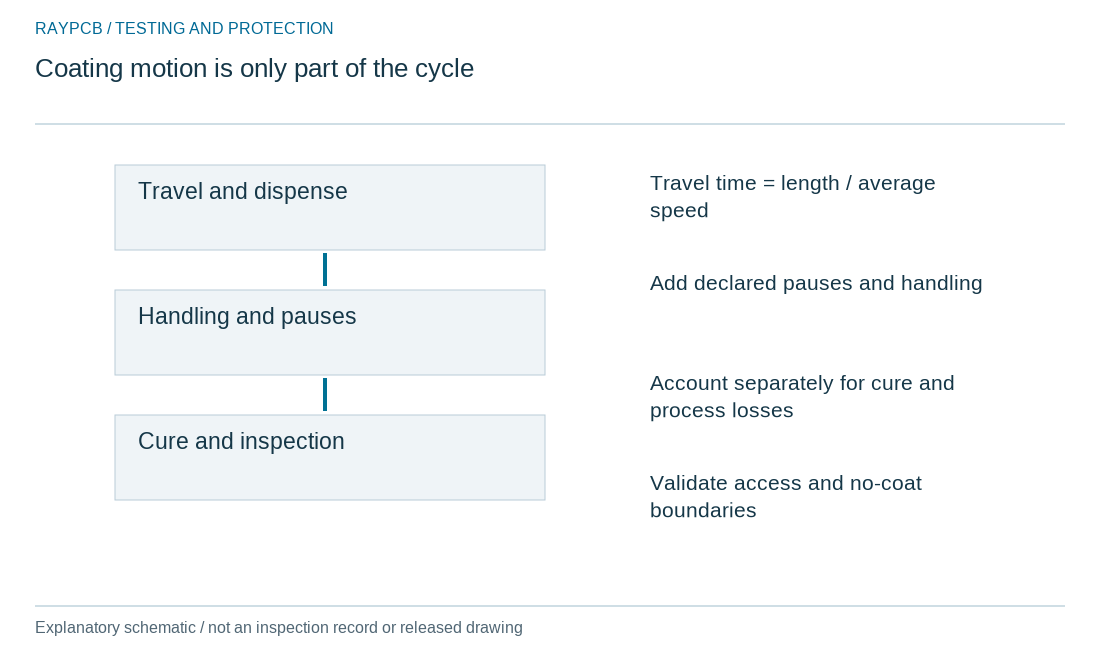
This page focuses on equipment and program controls for selective coating. The cycle worksheet separates travel time from entered dispensing pauses and handling; it is a simple planning model rather than a machine-program simulator.
Match the delivery system to the material
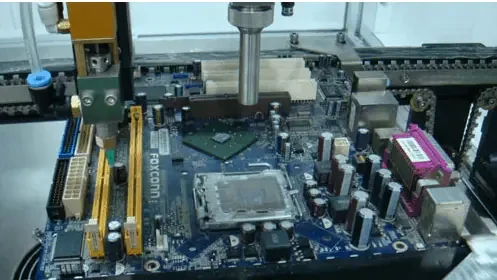
The applicator, pressure or pumping arrangement and fluid path must suit the exact coating. Viscosity, solids, solvents and cure behavior affect delivery and maintenance. A setting developed for one product cannot be assumed suitable for another material in the same broad resin family.
Obtain the equipment and material suppliers' instructions and establish a representative process trial. The silicone coating guide demonstrates why product identity matters beyond the generic material name.
Program the real assembly geometry
Use the current board outline, fiducials, component heights and no-coat zones. Review the applicator's approach and clearance, including tilted or alternate delivery methods where supported. A path that looks clear in plan view may collide with a tall component or fail to reach a shadowed area.
Validate the program on representative hardware. Keep the program version associated with the assembly and coating drawing. Manual edits made at the machine need the same revision discipline as other production instructions.
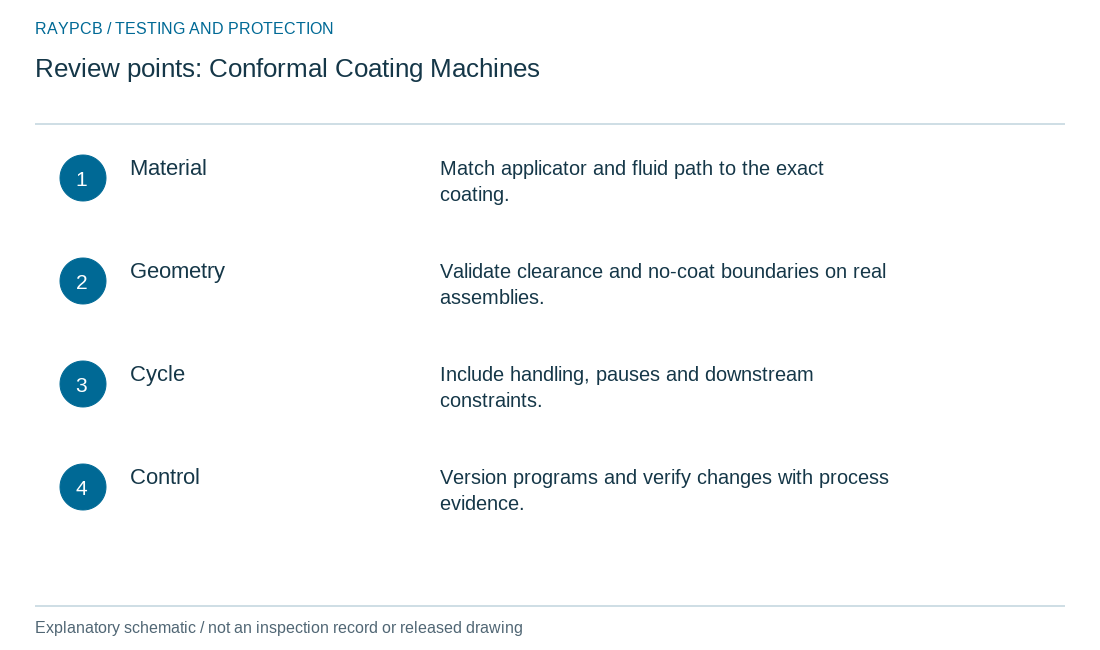
| Review item | What to establish |
|---|---|
| Material | Match applicator and fluid path to the exact coating. |
| Geometry | Validate clearance and no-coat boundaries on real assemblies. |
| Cycle | Include handling, pauses and downstream constraints. |
| Control | Version programs and verify changes with process evidence. |
Control the start, stop and transition behavior
Edges, corners, starts and stops can produce local film differences. Delivery response and motion acceleration matter in addition to nominal speed. Review overlap, masking boundaries and places where material can flow into a prohibited region.
The worksheet estimates travel length divided by speed, plus entered pauses and handling. It excludes acceleration, purge, refill, drying and parallel operations unless included in your measured allowances. Use actual machine records to improve the model.
Keep material management visible
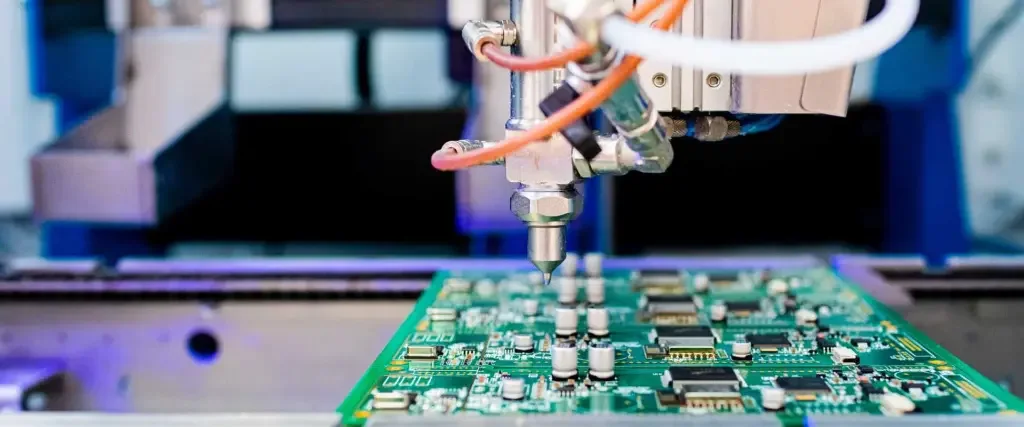
Record batch identity, storage, time in the system and any required mixing or condition checks. Define how unused material, purge and cleaning are handled under the relevant instructions. Material changes can influence the process even when the motion program is unchanged.
Review compatibility of the fluid path and maintenance materials. Process stability requires both controlled equipment and a controlled coating, not a robot repeating an unverified recipe.
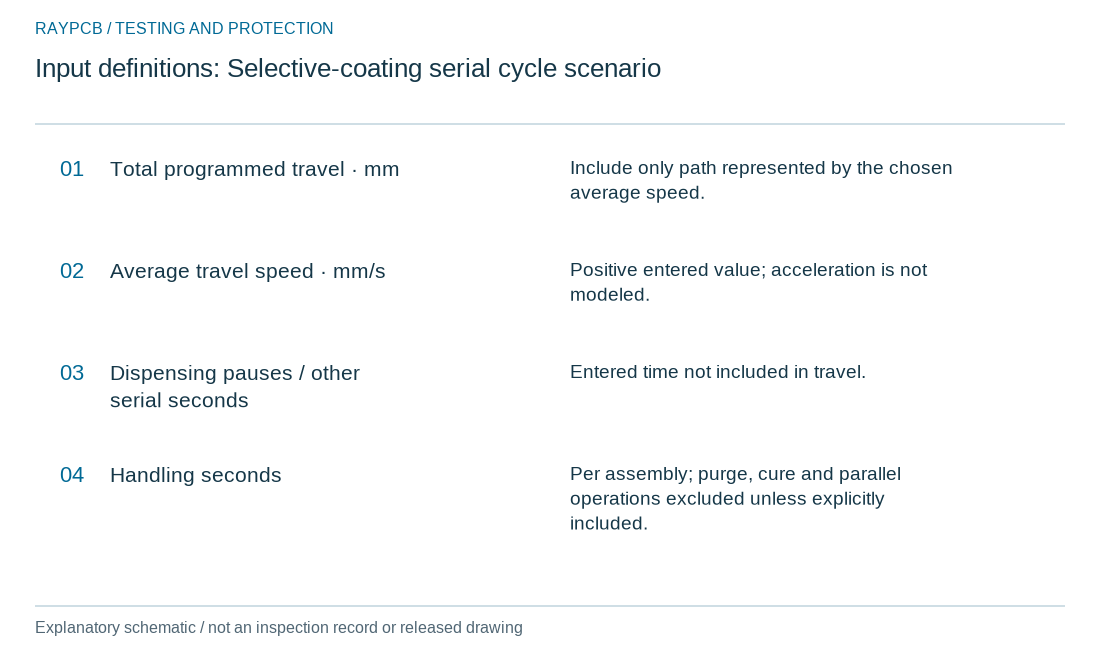
Selective-coating serial cycle scenario
Selective-coating serial cycle scenario
Use the current inputs and keep the assumptions
Choose the engineering question before entering numbers. Fields begin blank. Load example fills teaching values so you can understand the model; those values are not recommended dimensions, process settings or market prices. The example label remains visible after edits. Reset before preparing a record based entirely on your own project data.
Use the displayed units and keep a reference for each input. Counts must describe the same scope, and measurements must share the declared conditions. A threshold entered by you remains your supplied review condition. The website does not turn it into an IPC limit or an approved product requirement. If the necessary value is unknown, obtain the evidence rather than replacing it with an attractive assumption.
Read the result and its limitations together. An access fraction is not fault coverage, a cost allowance is not a quotation, and a completed evidence checklist is not a safety or quality approval. Negative margins remain visible where the model permits them. They identify a conflict in the entered scenario rather than silently adjusting the result.
Changing an input invalidates the result and disables its download until you run the tool again. The text record contains the inputs, result and limitations. Processing stays in your browser; no CAD files, instruments or certificates are read. No data is automatically transferred to the enquiry form. Download and attach the record manually if useful, or contact RAYPCB directly without completing the tool.
| Input | What to establish before using it |
|---|---|
| Review reference | Use a nonconfidential revision or scope reference. |
| Total programmed travel · mm | Include only path represented by the chosen average speed. |
| Average travel speed · mm/s | Positive entered value; acceleration is not modeled. |
| Dispensing pauses / other serial seconds | Entered time not included in travel. |
| Handling seconds | Per assembly; purge, cure and parallel operations excluded unless explicitly included. |
Integrate cure and inspection capacity
Application can be faster than the downstream cure or verification step. Plan the complete route, work-in-process handling and permitted waiting conditions. Avoid sizing the line solely from the dispensing cycle.
The PCBA coating workflow connects cleaning, masking, application, cure and release. Confirm how coverage, thickness and cure evidence will be obtained for the actual product.
Example: fast motion, incomplete production scope
An illustrative equipment comparison lists a short coating path time but excludes board loading, material checks and cure handling. Another quote includes these operations. The speed figures are not directly comparable until the scope is aligned.
Measure representative cycles, including any product changeover. A machine with a fast nominal path may still be unsuitable if access, material compatibility or inspection requirements cannot be met consistently.
Prepare an equipment or process review package
Send assembly geometry, coating material, no-coat drawing, quantity, changeover pattern, required film and evidence requirements. Identify existing equipment if the task is process transfer rather than new equipment selection.
Use electronics manufacturing test-equipment planning for shared station-control principles and PCB assembly for the production enquiry. This page makes no claim that a specific machine model is currently installed at RAYPCB.
Questions to resolve before the next build
Can a coating path be transferred directly between machines? Motion conventions, applicators, delivery response, fixtures and material behavior can differ. Treat transfer as a controlled process review with representative verification. Preserve the intended no-coat boundaries and film requirements rather than assuming that matching nominal speed reproduces the original result.
What limits actual line throughput? Application, handling, material management, cure, inspection and changeover can each become the constraint. Measure the complete route under the intended product mix. A faster dispense path may not increase completed output if cure handling or inspection remains slower. Keep the worksheet's simple serial estimate distinct from a measured production-capacity commitment.
Qualify the complete station and its handoff
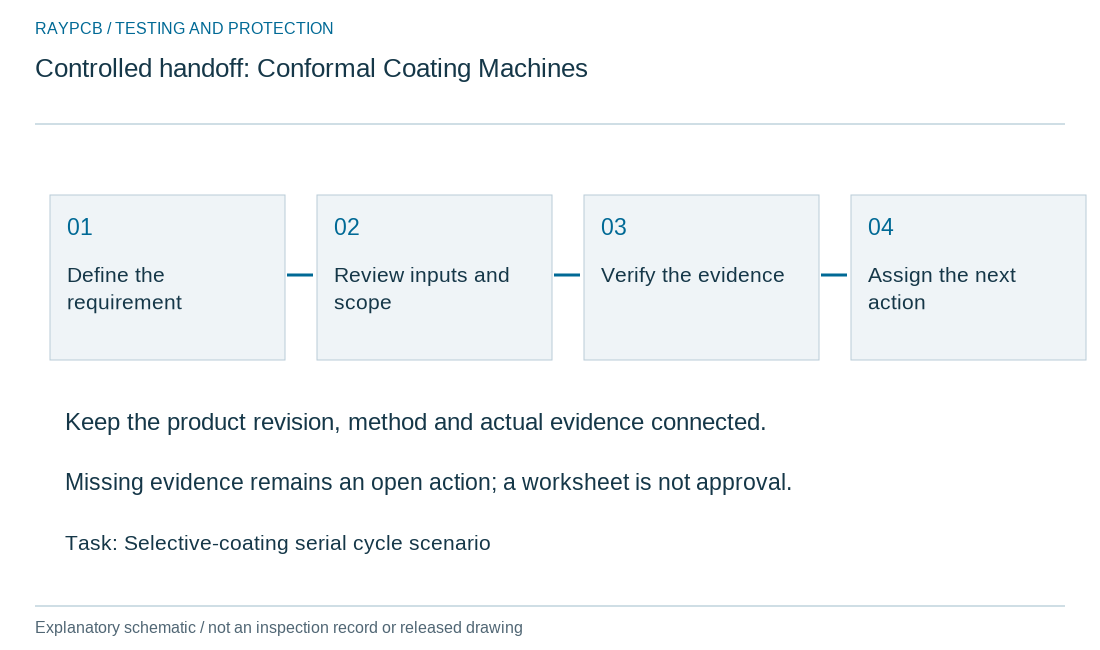
Begin with a requirement-to-record map. Each important decision should identify the object being evaluated, the method, the responsible owner and the evidence expected. This makes gaps visible before a supplier quotation or production program turns assumptions into routine practice. Keep mandatory requirements separate from useful supplementary observations.
Control document identity at the level needed for the task. A drawing, standard, firmware image, test program and fixture may each have its own revision. Record the compatible combination rather than assuming that the newest file in every category belongs together. Resolve conflicts between the purchase requirement and the implementation before work begins.
Ask whether another qualified reviewer can reproduce the interpretation. The record should identify units, locations, conditions, limits and any decision rule. A pass statement without scope can be misleading; a long report without specimen identity can be equally unhelpful. More data is valuable only when it answers the question and remains traceable.
Separate evidence availability from evidence verification. A box marked recorded means that someone reports having a document, not that the document is current, applicable or correct. Review the actual material and retain a reference to the approved version. The online worksheets intentionally avoid a compliance percentage because incomplete evidence does not become acceptable through averaging.
Define the handling of exceptions. Missing information, an invalid run, an unavailable station and a confirmed product failure need different actions. Record who can approve a deviation and which requirements remain binding. A supplier acknowledgment should not be mistaken for technical approval, and a successful software run should not substitute for method validation.
For external work, confirm scope and responsibility. Identify any subcontracted activity, the method used, the report issuer and the records that will be returned. Where accreditation is relevant, verify the applicable scope rather than relying on a broad logo. Where the work is outside that scope, describe it accurately instead of implying a status that has not been established.
Use the handoff to support the next person in the process. A buyer needs comparable scope, an engineer needs interpretable evidence and a production team needs executable instructions. A concise controlled package can serve all three when the task, version, result and open points are clear. Keep confidential design and customer information in the agreed project channel rather than in public comments or analytics.
Standards, source context and limits
Use each reference for its stated scope. Equipment and material documentation applies to the identified product and conditions. A published study describes its own specimens and methods; its settings are not universal production limits. Public standard summaries and revision tables do not replace the controlled normative document.
Agree the applicable standards, revisions, product class where relevant, measurement methods and exceptions before production. Distinguish printed-board requirements, assembly workmanship, laboratory competence and finished-product certification. A method name or photograph does not establish that a supplier holds an accreditation or that a particular test is included in an order.
Archive photographs illustrate relevant boards, equipment or operations from the existing RAYPCB website. They are not evidence of current equipment ownership or results from your project. Original diagrams explain concepts and measurement boundaries; they are not inspection records or released manufacturing drawings. Confirm the actual service and reporting scope in the project review.